Finding the best Inconel 690 Screws requires more than comparing prices or polished product photographs. Buyers should examine alloy documentation, thread accuracy, heat treatment, surface condition, and supplier experience. Inconel 690 contains substantial chromium, giving it strong resistance to oxidation and many corrosive environments. That matters around steam, chemicals, heat exchangers, and demanding industrial equipment.
Dr. Roger C. Reed, author of The Superalloys, has stated, “Superalloy performance is inseparable from composition, processing, and microstructure.” This principle remains practical when evaluating Inconel 690 Screws. A reliable supplier should provide a material test report, batch identification, dimensional inspection records, and clear manufacturing standards. Ask whether the screws were cold worked, machined, or produced through another controlled process. Small differences can affect installation torque and long-term performance.
Real purchasing experience often reveals details that catalogs omit. A good screw should arrive with clean threads, consistent heads, and packaging that prevents metal damage. Request samples before approving a large order. Check the thread with a calibrated gauge, not just by hand. That simple step can expose expensive problems.
The “best” supplier is not always the cheapest. Sometimes, specifications remain unclear. That is a warning sign. Confirm tensile requirements, thread type, size range, finish, quantity, lead time, and inspection support before payment. Buyers should also verify whether the supplier can maintain traceability across repeat orders. A careful comparison reduces risk, although no supplier should be accepted without independent verification.
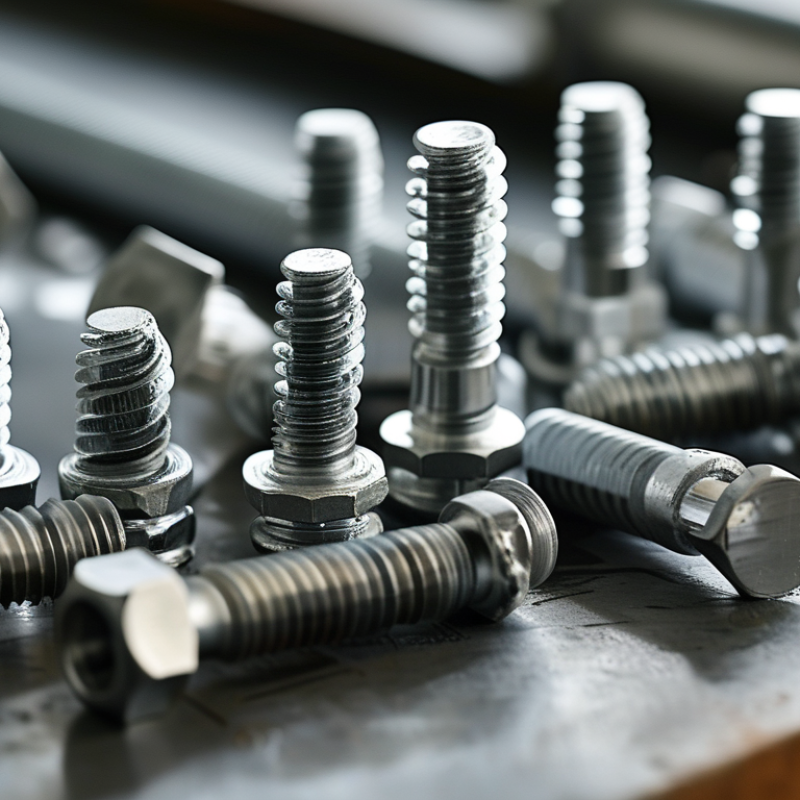
Where to Buy China Best Inconel 690 Screws?
Inconel 690 is defined by UNS N06690. Its chemistry matters more than surface appearance. ASTM B166 and B167 material tables specify approximately 27–31% chromium, with nickel forming the balance. Iron commonly remains around 7–11%, while carbon is tightly limited. This chromium-rich structure supports oxidation resistance and helps reduce corrosion risks in demanding heat-transfer environments. The Nickel Institute also identifies Alloy 690 as a high-chromium nickel alloy used in nuclear and chemical applications. These figures should appear on a heat-specific material certificate, not only in a product description.
When sourcing screws from China, ask for PMI testing, tensile results, thread inspection, and traceable heat numbers. ASTM dimensional requirements should match the selected fastener standard. A supplier may advertise “690 alloy,” but that phrase alone proves little. I have seen polished fasteners look excellent while documentation remained incomplete. That is a warning sign. Buyers should compare chromium results, nickel balance, hardness, and lot consistency. ISO 9001 certification supports process control, but it does not replace independent testing. For critical service, use a laboratory report linked to the exact shipment.
Tips: Request a sample before bulk purchasing. Check thread fit with a calibrated gauge. Confirm whether the screws are cold-worked or solution-annealed. Do not accept vague certificates. One overlooked detail can weaken an otherwise careful specification.
Where to Buy China Best Inconel 690 Screws?
Set Performance Benchmarks: ≥586 MPa Tensile and ≥240 MPa Yield Strength
When sourcing Inconel 690 screws from China, treat strength as a purchasing requirement, not marketing language. Specify minimum tensile strength of 586 MPa and yield strength of 240 MPa. Ask suppliers to identify the material condition, heat treatment, and test temperature. These details can change results significantly. Room-temperature values should be clearly separated from elevated-temperature performance.
Reliable suppliers should provide heat numbers, chemical analysis, and mechanical test reports for each production batch. Request reports from an accredited independent laboratory when the application is critical. Check thread dimensions with calibrated gauges, not visual inspection alone. A certificate alone is not proof. It must match the shipped lot.
I would also review forming methods and surface treatment records. Excessive cold work may improve strength but affect ductility and thread performance. Inspect sample screws for clean roots, consistent pitch, and damaged crests. Include tensile and yield requirements in the purchase order. Vague wording creates avoidable disputes.
Some supplier records look complete but lack test temperatures. That is a weakness. Ask for corrective evidence before approving bulk production. A small pre-production sample can reveal problems early, although it cannot replace batch testing. Compare several qualified Chinese sources by traceability, inspection discipline, and documented compliance rather than price alone.
| Data Dimension | Benchmark / Requirement | Unit | Purchasing Verification Point |
|---|---|---|---|
| Alloy designation | Inconel 690 / UNS N06690 | — | Confirm the UNS number on the certificate and product marking. |
| Minimum tensile strength | ≥ 586 | MPa | Review mill test results for the actual lot and heat-treatment condition. |
| Minimum yield strength | ≥ 240 | MPa at 0.2% offset | Ensure the test method and 0.2% offset definition are stated. |
| Minimum elongation | ≥ 30 | % | Check gauge length and test direction on the mechanical test report. |
| Chromium content | 27.0–31.0 | wt.% | Use heat analysis to verify corrosion-resistance chemistry. |
| Iron content | 7.0–11.0 | wt.% | Confirm compliance with the specified alloy chemistry range. |
| Carbon content | ≤ 0.05 | wt.% | Lower carbon supports control of carbide-related corrosion effects. |
| Manganese content | ≤ 0.50 | wt.% | Verify against the heat-analysis report. |
| Silicon content | ≤ 0.50 | wt.% | Confirm the maximum specified silicon level. |
| Sulfur content | ≤ 0.015 | wt.% | Low sulfur helps limit hot-workability and weldability concerns. |
| Copper content | ≤ 0.50 | wt.% | Check the chemical analysis for each heat. |
| Fastener thread | Unified, metric, or project-specific thread | — | Specify nominal diameter, pitch or TPI, tolerance class, and thread length. |
| Dimensional tolerance | To the agreed drawing or fastener standard | — | Control shank diameter, length, head dimensions, concentricity, and thread gauge results. |
| Surface condition | Clean, free from harmful scale, cracks, laps, and damaging defects | — | Define inspection method, allowable surface marks, and optional penetrant testing. |
| Documentation | EN 10204 3.1 material certificate recommended | — | Require heat number traceability, chemical analysis, mechanical results, dimensions, and inspection records. |
| Application suitability | High-temperature and corrosion-resistant service, subject to engineering review | — | Evaluate temperature, preload, relaxation, galvanic compatibility, and installation torque before approval. |
Buying Inconel 690 screws from China requires more than comparing prices. Match the screw specification to ASTM F468, ASTM B166, and ISO 3506 requirements before requesting quotations. ASTM F468 addresses nonferrous alloy fasteners, including mechanical and dimensional expectations. ASTM B166 covers nickel-chromium alloy bar and rod products, which may support the raw material traceability. ISO 3506 mainly applies to corrosion-resistant stainless steel fasteners, so it may not directly certify Inconel 690 screws. This distinction matters.
Ask each manufacturer for a heat number, chemical analysis, mechanical test report, and dimensional inspection record. The material certificate should identify nickel, chromium, and other required elements. Confirm the testing method and report standard. A certificate can look complete and still miss the fastener grade. Check thread form, pitch, head dimensions, length tolerance, and surface condition against your drawing. Small details cause expensive delays.
For critical service, request samples before placing a production order. Measure the threads with calibrated gauges, not visual judgment. Review tensile strength, hardness, and corrosion requirements with an independent inspector when possible. China has capable precision manufacturers, but quality consistency can vary between batches. I have seen purchasing teams trust a mill certificate too quickly. That shortcut needs reconsideration. Select a supplier that explains standard conflicts clearly, accepts third-party inspection, and provides stable traceability from billet to finished screw.
Buying China’s best Inconel 690 screws requires evidence beyond a polished website. Ask suppliers for positive material identification (PMI) on the finished lot, not only on incoming bar stock. The PMI report should show nickel, chromium, iron, and minor elements against the agreed specification. Portable X-ray fluorescence is useful for screening, but it may not measure lighter elements accurately. For critical orders, laboratory verification is safer.
Request a complete Material Test Certificate (MTC). It should identify the heat number, screw size, chemical analysis, tensile results, hardness, and manufacturing route. The heat number must match the marking on cartons and samples. One missing link matters. I have seen paperwork look complete while the traceability chain failed at packing.
An ISO 9001 certificate shows a quality management system, not automatic alloy quality. The ISO Survey 2022 reported 1,265,216 valid ISO 9001 certificates worldwide, so certification alone cannot distinguish a specialist fastener producer. Check the certificate scope, issuing body, expiry date, and manufacturing address. Also request heat-treatment records showing furnace ID, cycle temperature, holding time, atmosphere, calibration status, and cooling method. Compare them with the purchase specification and applicable ASTM requirements. A useful audit includes sample review, witness testing, and independent retesting. This costs more, admittedly, but a low-cost order with weak records can become an expensive installation problem.
A reliable purchase starts with samples, not a catalogue promise. Request several screws from the proposed production lot. Check thread fit, head dimensions, surface marks, and traceable heat numbers. Ask for chemical analysis confirming UNS N06690, plus tensile and hardness results.
ASTM G28 testing can help assess intergranular corrosion resistance, but the test environment must reflect your service conditions. Salt spray alone may mislead.
Nickel pricing can change quickly: the USGS Mineral Commodity Summaries 2025 reported global nickel mine production near 3.7 million metric tons in 2024. The World Bank Pink Sheet also shows notable nickel-price movement. Therefore, request a quotation validity period. Do not compare unit prices only.
Confirm MOQ, sample charges, production lead time, inspection time, and packaging separately. A 500-piece MOQ may appear attractive, yet unused stock ties up cash. Ask whether delivery takes 25 or 45 days.
Get the total delivered cost, including freight, insurance, import duties, testing, tooling, and possible rework. I would also request a pre-shipment inspection and corrosion-test records linked to the exact heat.
One weakness remains: laboratory results cannot fully predict field failure. Recheck assumptions before scaling the order.
Alloy 690 uses UNS N06690 chemistry. It contains about 27–31% chromium and nickel as the balance. Iron commonly ranges from 7–11%. Carbon remains tightly controlled. Check the heat-specific certificate.
High chromium supports oxidation resistance and reduces corrosion risks in hot heat-transfer environments. Appearance cannot prove performance. Numbers matter more.
Request chemical analysis, tensile results, hardness data, thread inspection, and traceable heat numbers. Each document should match the exact shipment. Vague certificates are a warning.
Check thread fit with a calibrated gauge. Measure head dimensions and inspect surface marks. Confirm the heat number on samples and paperwork. Small details matter.
Yes, especially for demanding service. Define the solution chemistry, temperature, stress, and exposure time first. A simple salt test may mislead. Testing is not prediction.
Ask whether the screws are cold-worked or solution-annealed. The condition can affect strength, hardness, and service behavior. I might still request clarification.
Compare total delivered cost, not unit price alone. Include freight, insurance, duties, testing, tooling, packaging, and possible rework. Cheap can become expensive.
Confirm sample approval, minimum quantity, sample charges, lead time, inspection time, and quotation validity. Ask for pre-shipment inspection records. Recheck assumptions before scaling.
No. Laboratory results cannot fully reproduce every service condition. They reduce uncertainty, but field failure remains possible. Plan conservatively.
Choosing the best Inconel 690 Screws from China requires more than comparing prices. First, confirm that the material is UNS N06690, containing approximately 27–31% chromium with nickel as the balance. The screws should meet practical performance benchmarks, including at least 586 MPa tensile strength and 240 MPa yield strength, while their dimensions, mechanical properties, and chemical composition should be matched against relevant ASTM F468, ASTM B166, and ISO 3506 requirements where applicable.
A reliable supplier should provide positive material identification (PMI), complete material test certificates, ISO 9001 quality documentation, and traceable heat-treatment records. Before placing a bulk order, request samples and verify dimensional accuracy, surface quality, mechanical performance, and corrosion resistance under suitable test conditions. Also evaluate minimum order quantities, production and delivery lead times, packaging, inspection arrangements, and the total delivered cost. A supplier that combines consistent documentation, controlled manufacturing, and responsive communication is more likely to deliver dependable fasteners for demanding applications.

BSF