What Is the Best China Inconel 690 Washers Supplier?

Time:2026-10-10 Author:Sophia
0%

Choosing the best China supplier for Inconel 690 Washers requires more than comparing unit prices. These washers may face elevated temperatures, corrosive environments, and demanding bolted-joint loads. In practice, buyers should examine alloy verification, dimensional control, surface condition, and delivery consistency. Small defects can create serious leakage risks. Details matter.

A dependable manufacturer should explain its production route, from material sourcing and blanking to heat treatment, inspection, and packing. Ask for heat numbers, mill certificates, inspection reports, and traceability records for each lot. Independent testing can confirm chemistry, hardness, tensile performance, and dimensions. Relevant ASTM or ASME requirements should be discussed with an engineer, not copied blindly from a sales page. That distinction matters.

This guide compares Chinese suppliers through evidence rather than promotional claims. It considers factory experience, machining capability, quality systems, export communication, sample approval, and after-sales response. Clear drawings, tolerances, washer thickness, and packaging expectations should be agreed before production. No supplier is perfect. A low quote may hide weak documentation or unstable lead times, while a famous name may still miss a specific tolerance. The best choice is therefore the supplier that consistently matches the application, provides verifiable records, and communicates problems early. That is a more useful definition of reliability.
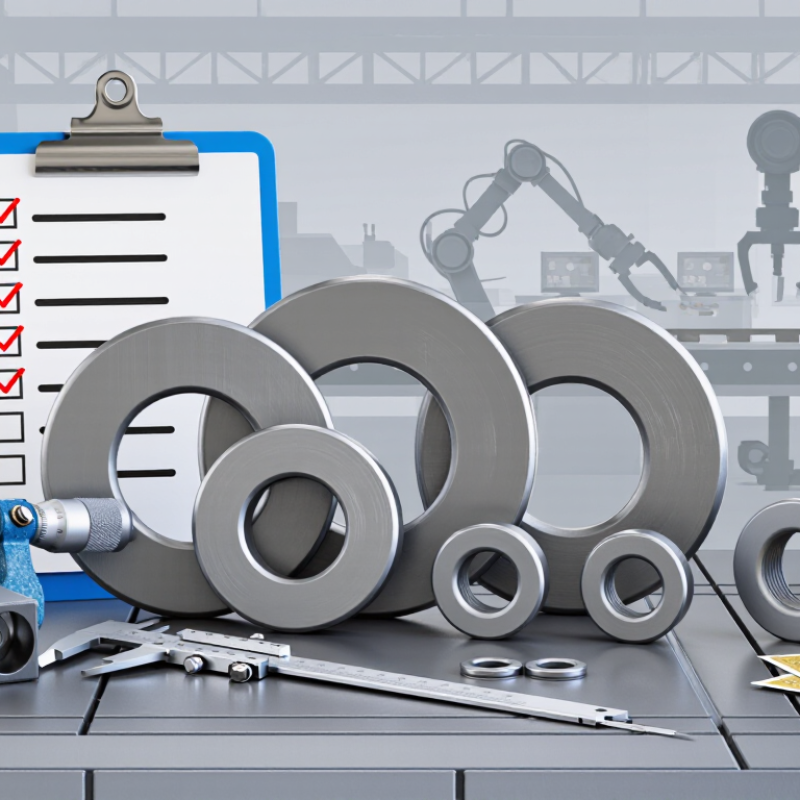
What Is the Best China Inconel 690 Washers Supplier?

What Is Inconel 690 and Why Is It Used for Washers?

What Is Inconel 690 and Why Is It Used for Washers?

Inconel 690 is a nickel-based alloy containing substantial chromium and iron. Its chemistry gives it strong resistance to oxidation, chloride conditions, and many aggressive chemicals. It also performs reliably at elevated temperatures. These qualities make it suitable for heat exchangers, chemical equipment, and demanding power-generation environments.

Washers made from Inconel 690 help spread clamping pressure across a joint. They can reduce surface damage and support stable bolt preload during thermal cycling. This matters when equipment repeatedly heats, cools, and expands. In practical inspections, I would check the washer’s flatness, thickness, edge quality, and surface condition. A tiny burr can disturb contact. That detail is easy to miss.

Tips: Do not choose the alloy by name alone. Confirm chemical composition, mechanical test results, heat treatment, dimensions, and batch traceability. Ask whether the supplier can provide inspection records and consistent packaging. Inconel 690 is strong, but it is not automatically the best choice for every washer. Its cost can be high, and poor installation may cause galling or uneven loading. This assumption deserves review. A dependable supplier should explain material limits clearly, not promise universal performance.

What Is Inconel 690 and Why Is It Used for Washers?

Inconel 690 is a nickel-chromium-iron alloy designed for high-temperature and corrosion-resistant applications. Its high chromium content supports resistance to oxidizing environments, while the nickel-based structure helps retain performance under heat and stress. These properties make it suitable for washers used in demanding industrial assemblies.

What Standards Should China Inconel 690 Washers Meet?

A reliable China Inconel 690 washer supplier should meet clearly defined material and inspection standards. The washer material should be identified as UNS N06690 and supported by heat-specific chemistry records. ASTM B166, or its ASME SB-166 equivalent, can guide wrought nickel-chromium-iron alloy requirements. However, the purchase specification must confirm whether the selected washer form is covered.

Each lot should receive dimensional inspection, surface examination, hardness testing, and tensile verification where applicable. ASTM E8/E8M and ASTM E18 may support mechanical testing. Positive material identification should also verify nickel, chromium, and iron content. Small details matter. The certificate should show heat number, manufacturing route, test results, and traceability to the final washers. EN 10204 Type 3.1 documentation is useful for controlled industrial procurement.

The USGS Mineral Commodity Summaries 2024 reported approximately 3.6 million metric tons of global nickel mine production in 2023. That figure underlines the need for careful alloy traceability, not merely a material label. The ISO Survey 2023 recorded over 1.26 million ISO 9001 certificates worldwide, yet certification alone does not prove washer conformity. A supplier should link its quality system to actual inspection evidence. Some specifications remain incomplete. Temperature, preload, surface condition, and service chemistry should be stated before approval. Otherwise, even a polished certificate may hide an unsuitable part.

What Is the Best China Inconel 690 Washers Supplier? - What Standards Should China Inconel 690 Washers Meet?
Evaluation Dimension Requirement for Inconel 690 Washers Applicable Standard or Reference Supplier Evidence to Request Recommended Acceptance Check Priority
Material Identity The washer material should be Nickel-Chromium-Iron Alloy 690, identified by UNS N06690 or the equivalent designation stated in the purchase specification. ASTM B168 for plate, sheet and strip; ASTM B166 for bar, rod and wire; ASTM B564 for forgings, when applicable. Material certificate showing the alloy designation, heat number, product form, chemical composition and applicable material standard. Verify the alloy designation and heat number against the purchase order and certificate. Critical
Chemical Composition Chemical composition must conform to the limits specified for Alloy 690 in the applicable material standard or agreed technical specification. ASTM B166 or ASTM B168, depending on the raw material form; chemical analysis methods may be selected from ASTM E1473 or another validated method. Heat analysis report, product analysis report when required, and laboratory accreditation or test-method details. Check each reported element against the specified alloy limits and confirm traceability to the heat number. Critical
Washer Dimensions Outside diameter, inside diameter, thickness, flatness and edge condition must match the approved drawing or dimensional schedule. ASME B18.21.1 for inch-series plain washers; ISO 7089 or ISO 7090 for applicable metric plain washers. Approved drawing, dimensional inspection report, calibrated measuring equipment list and sampling plan. Measure representative samples from each production lot and record actual values against drawing tolerances. Critical
Mechanical Properties Tensile strength, yield strength, elongation and hardness should meet the values defined by the applicable material specification or customer purchase specification. ASTM B166 or ASTM B168 for the supplied material form; ASTM E8/E8M for tension testing; ASTM E18 or ASTM E384 for hardness, as applicable. Mechanical test report linked to the material heat and production lot, including test temperature and specimen orientation where relevant. Confirm that the test method, specimen location and reported results satisfy the agreed specification. High
Heat Treatment The heat-treatment condition must be stated because it can affect hardness, strength, dimensional stability and service performance. Applicable requirements in ASTM B166, ASTM B168 or the approved technical specification. Heat-treatment chart or statement, furnace identification, treatment temperature range, holding time and cooling method. Check the supplied condition against the purchase order and material certificate. High
Surface Quality Washers should be free from harmful cracks, laps, seams, heavy scale, contamination and sharp burrs that could affect assembly or service. Visual and workmanship requirements in the approved drawing, purchase specification and applicable material standard. Visual inspection procedure, surface photographs when requested, nonconformance records and corrective-action history. Inspect both faces and the bore; reject defects that reduce seating area, thickness or corrosion resistance. High
Corrosion and Service Suitability Alloy 690 should be selected for the actual temperature, pressure, radiation, chemical exposure and galvanic environment. A washer is not automatically suitable for every nickel-alloy application. Project-specific engineering specification; ASTM G28 may be considered for certain corrosion evaluations of nickel-rich alloys when technically justified. Application review, compatibility statement, corrosion-test report when required and service-temperature limitations. Obtain engineering approval for nuclear, high-temperature, chloride, caustic or other severe-service applications. Service-Dependent
Traceability Each production lot should remain traceable from raw material through forming, machining, heat treatment, inspection and packing. EN 10204:2004, especially Type 3.1 inspection certificates when specified by the buyer. Lot number, heat number, manufacturing route, inspection records, packing list and certificate of conformity. Perform a document-to-product traceability check on randomly selected packages. Critical
Quality Management The supplier should operate a documented quality management system covering purchasing, production, inspection, calibration and nonconforming product control. ISO 9001 certification is a recognized quality-management reference. Current certificate, certification scope, audit status, quality manual summary and internal corrective-action procedure. Confirm that the certificate scope covers the manufacture or processing of metal components. High
Inspection Equipment Measurement equipment must be suitable for the washer size and required tolerances and must be periodically calibrated. ISO 9001 calibration-control requirements and the supplier's documented inspection procedure. Calibration certificates for micrometers, gauges, optical measurement systems, hardness testers and chemical-analysis equipment, as applicable. Check calibration validity and confirm equipment resolution is suitable for the specified tolerances. High
Manufacturing Capability The supplier should demonstrate control of blanking, stamping, machining, deburring, forming and finishing processes appropriate for nickel alloy 690. Approved process specification, drawing requirements and documented production controls. Process flow chart, control plan, first-article inspection report and sample parts from the proposed manufacturing route. Evaluate dimensional repeatability, burr control, surface condition and lot-to-lot consistency. High
Non-Destructive Examination Liquid penetrant or other non-destructive examination may be required where cracks or surface-connected defects could create a service risk. ASTM E1417/E1417M for liquid penetrant testing, when specified by the engineering or purchase specification. NDE procedure, operator qualification, acceptance criteria and inspection report tied to the production lot. Apply NDE only when justified by component risk, manufacturing route or customer specification. Service-Dependent
Packaging and Marking Packaging should prevent moisture, contamination, scratching, mixing of lots and deformation during transport. Buyer packaging specification and applicable shipping requirements. Packaging method, product labels, lot identification, quantity per package and certificate-document control process. Verify that labels remain legible and that each package can be linked to its inspection documents. Medium
Commercial Reliability The preferred supplier should provide stable lead times, clear technical communication, controlled subcontracting and consistent lot quality. Supplier qualification procedure and agreed purchase terms; no single commercial metric should replace technical approval. Production capacity statement, lead-time history, subcontractor list, reference projects without undisclosed confidential information and corrective-action response time. Use a documented supplier scorecard covering quality, delivery, documentation and responsiveness. Medium
Note: The applicable material standard depends on the starting product form and manufacturing route. Final acceptance limits should always be stated on the approved drawing, purchase order or project-specific technical specification.

How to Evaluate a China Inconel 690 Washers Supplier

Choosing the best China Inconel 690 washers supplier requires more than comparing unit prices. Begin by checking the supplier’s experience with nickel alloy products and high-temperature applications. Ask for material certificates showing chemical composition, heat numbers, and mechanical properties. Reliable records should connect each washer batch to its original raw material.

Review the supplier’s manufacturing process in practical detail. Confirm control of outer diameter, inner diameter, thickness, flatness, and surface finish. Request inspection reports with actual measurements, not only standard claims. Samples can reveal burrs, uneven edges, or discoloration after cleaning. Those small details matter during assembly. Ask whether the supplier uses calibrated gauges and maintains inspection records.

Also examine communication and delivery control. A dependable supplier should explain production stages, packaging methods, and expected lead times clearly. Vacuum sealing or moisture-resistant wrapping may protect washers during storage and transport. Discuss minimum order quantities, replacement procedures, and custom drawing support before placing an order. A factory visit or live video audit can provide useful evidence, although it cannot replace independent testing. I have seen attractive samples fail because later batches changed slightly. That risk deserves attention. Avoid relying on polished certificates alone; verify the issuing laboratory and compare documents with the delivered material. Good suppliers welcome detailed questions, but buyers should also provide accurate drawings and service conditions. Mistakes are not always the supplier’s fault.

Which Manufacturing and Quality Factors Matter Most?

Choosing a China-based Inconel 690 washer supplier requires more than comparing unit prices. Manufacturing control matters most where washers face heat, vibration, and corrosive media. ASTM B168-23 identifies UNS N06690 sheet requirements, including chemical composition and mechanical performance. For annealed material, published requirements commonly include about 550 MPa tensile strength and 240 MPa yield strength. Ask for heat numbers, thickness records, and laboratory reports. Traceability matters.

Cutting and forming methods can change washer reliability. Laser cutting may create a heat-affected edge, while stamping can introduce burrs or distortion. A capable factory should control blanking clearance, flatness, edge finishing, and dimensional inspection. Measure inner diameter, outer diameter, and thickness with calibrated equipment. Do not assume. Ask for sampling plans based on ISO 2859-1 or an agreed inspection level. Small washers still need serious inspection.

Quality evidence should connect the raw coil to the finished batch. The 2023 ASME Boiler and Pressure Vessel Code emphasizes material identification, documentation, and accepted testing practices for pressure-related applications. ISO 9001 certification supports process discipline, but it does not prove every washer is perfect. A recent audit report, mill certificate, hardness results, tensile data, and surface photographs provide stronger evidence. One weakness remains: some suppliers present generic certificates instead of batch-specific records. That gap deserves direct questioning before purchase.

How to Choose the Best Supplier for Your Application

What Is the Best China Inconel 690 Washers Supplier?

Selecting a China supplier for Inconel 690 washers requires evidence, not attractive pricing. Inconel 690, identified as UNS N06690, is valued for chromium-rich corrosion resistance and high-temperature service. Ask for heat numbers, chemical analysis, mechanical results, and dimensional inspection records. These documents should connect each washer to its original material batch.

Check the supplier’s process experience with thin rings, burr control, flatness, and controlled heat treatment. A useful trial order should include washers measured across several points, not just one diameter. Request test reports from an independent laboratory when the application is critical. ASTM and ASME requirements should be agreed before production, including tolerances, surface condition, and marking. Small details matter.

Supply stability also deserves attention. The USGS Mineral Commodity Summaries 2025 estimated global nickel mine production at about 3.7 million metric tons in 2024. The International Energy Agency reported that Indonesia supplied over half of mined nickel in 2023. This concentration can affect alloy costs and delivery schedules. A reliable supplier should explain material sourcing, inventory limits, and backup arrangements clearly. Do not accept vague claims.

Review sample quality yourself.

Pricing is only one measure. Compare inspection depth, traceability, packaging, export experience, and response time. Some suppliers may provide excellent documents but inconsistent washer thickness. That weakness is easy to miss. Ask for corrective-action records and a realistic production sample before approving larger quantities.

FAQS

What documents should a supplier provide for nickel alloy 690 washers?

Request chemical analysis, heat numbers, mechanical results, and dimensional inspection records. Traceability matters.

How can I check washer dimensions before ordering?

Ask for actual measurements of outer diameter, inner diameter, thickness, flatness, and surface finish. One measurement is not enough.

Why should I inspect samples personally?

Samples reveal burrs, uneven edges, stains, and discoloration after cleaning. Small defects can affect assembly.

What manufacturing controls should a supplier explain?

Ask about calibrated gauges, heat treatment, burr removal, cleaning, and inspection records. Details matter.

Should I trust a polished material certificate?

Not completely. Verify the issuing laboratory and compare documents with the delivered washer batch.

How can I judge production consistency?

Order a realistic trial batch and measure several washers across multiple points. One excellent sample proves little.

What delivery and packaging details should I confirm?

Discuss lead time, minimum quantities, replacement procedures, and drawing support. Moisture-resistant wrapping may protect stored washers.

Does a factory visit guarantee supplier quality?

No. A visit or live audit provides useful evidence, but independent testing remains valuable for critical applications.

How does nickel supply affect pricing and delivery?

Nickel costs and availability can change with mining concentration and inventory limits. Ask about backup sourcing.

What mistakes can buyers make during supplier evaluation?

Buyers may provide unclear drawings or service conditions. Suppliers can also change later batches slightly. Both sides need review.

Conclusion

Choosing the best China Inconel 690 Washers supplier requires more than comparing prices. Inconel 690 is a nickel-chromium alloy known for strong resistance to oxidation, corrosion, and stress-related damage, making it suitable for washers used in demanding thermal and chemical environments. A reliable supplier should provide products that meet the required material, dimensional, mechanical, and inspection standards, supported by complete documentation and traceable production records.

When evaluating a supplier, consider its manufacturing capabilities, raw material control, forming and heat-treatment processes, surface condition, dimensional accuracy, and quality inspection methods. Clear communication, consistent production capacity, sample approval, packaging, delivery reliability, and technical support are also important. The best supplier is one that understands your application requirements and can offer stable quality, customized specifications, and verifiable compliance. By assessing both technical performance and service reliability, buyers can select Inconel 690 Washers that provide long-term safety, durability, and value.


Sophia

Sophia

Sophia is a dedicated marketing professional with an exceptional depth of knowledge about her company's products and services. With a keen understanding of market trends and customer needs, she crafts insightful blog posts that not only inform but also engage readers, enriching the company’s online......