Selecting Nickel 690 Studs for a global project requires more than comparing prices or checking a material name. The correct choice depends on temperature, pressure, chloride exposure, welding requirements, and installation loads. Nickel 690, commonly known as Alloy 690, offers strong resistance to oxidation and many corrosive environments. However, performance still depends on manufacturing quality and service conditions. Small details matter.
Dr. John C. Lippold, a recognized welding-metallurgy specialist, has emphasized, “The key to successful welding is understanding the metallurgy.” That principle applies directly to Nickel 690 Studs. Buyers should confirm the alloy designation, heat number, mechanical properties, thread accuracy, surface condition, and applicable test reports. A stud may look perfect under warehouse lighting, yet fail expectations if traceability is incomplete or its threads were damaged during handling.
A dependable selection process also reviews temperature limits, preload requirements, galvanic compatibility, and coating practices. Request certificates from the manufacturer, not only a distributor’s summary. Check whether dimensions follow the project’s required standard. Confirm packaging for long-distance transport, especially where moisture and salt exposure are possible.
There is no universal “best” stud.
That is easy to forget.
Project teams should compare supplier experience, inspection plans, and replacement availability across regions. They should also question assumptions. For example, a corrosion-resistant alloy does not remove the need for correct torque control. Nor does a polished surface prove reliable performance. Choosing Nickel 690 Studs is therefore a technical decision, supported by documented evidence, realistic service data, and a willingness to revisit the specification when field conditions differ from the original design.
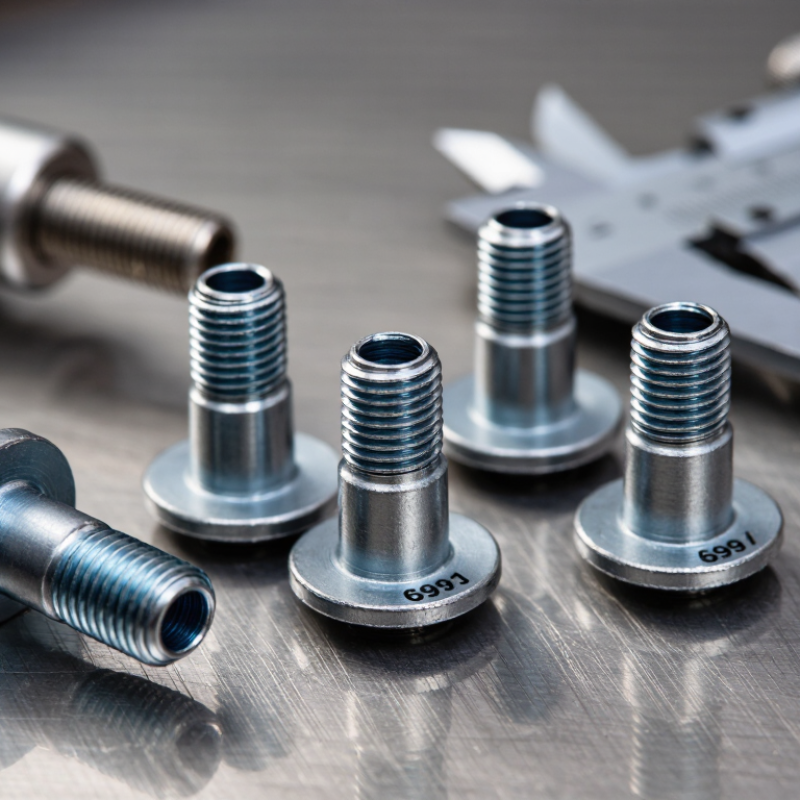
How to Choose Nickel 690 Studs for Global Projects
Define Nickel 690: UNS N06690 contains 58–63% nickel and 27–31% chromium. This chemistry supports strong oxidation resistance and useful corrosion performance at elevated temperatures. ASTM B166 identifies UNS N06690 composition and mechanical requirements for suitable nickel-alloy product forms. ASTM B564 also provides relevant requirements for nickel-alloy forgings.
Nickel content helps maintain ductility, while chromium supports a protective oxide layer. That balance matters around heat exchangers, furnace equipment, and chloride-containing process areas. The Nickel Institute’s technical publications describe nickel-chromium alloys as dependable choices for demanding thermal environments. Still, chemistry alone does not guarantee stud performance. Thread fit, heat treatment, surface condition, and installation torque can change results. I have seen specifications look correct while the supplied thread form created avoidable assembly problems.
Tips: Request a heat-lot certificate showing nickel and chromium results. Check diameter, thread class, length, and washer contact area against the project drawing. For sour-service exposure, review NACE MR0175/ISO 15156 requirements separately. Do not treat a general corrosion statement as project approval. A practical inspection plan should include dimensional checks, hardness testing, and traceability from the mill certificate to each packing label. One detail is easy to miss: mixed fastener lots may carry different production histories. That deserves a second review.
| Data Dimension | Typical or Specified Value | How It Supports Stud Selection |
|---|---|---|
| Alloy designation | Nickel Alloy 690; UNS N06690 | Use the UNS number on drawings, purchase orders, inspection documents, and material certificates to avoid substitution with another nickel alloy. |
| Nickel content | 58.0–63.0 wt% | Provides a nickel-rich matrix suited to elevated-temperature and corrosive-service applications. |
| Chromium content | 27.0–31.0 wt% | Supports resistance to oxidation and many oxidizing aqueous environments. |
| Iron content | Balance, typically up to approximately 9.0 wt% maximum depending on the applicable product specification | Confirm the governing standard because composition limits can vary slightly by product form and specification. |
| Carbon | 0.05 wt% maximum | A controlled carbon level helps limit carbide-related corrosion concerns during fabrication and service. |
| Manganese | 0.50 wt% maximum | Check the material certificate against the selected procurement specification. |
| Silicon | 0.50 wt% maximum | Useful as a certificate verification point for heat and lot traceability. |
| Sulfur | 0.015 wt% maximum | Low sulfur supports hot-working and fabrication quality; verify the applicable standard before acceptance. |
| Copper | 0.50 wt% maximum | Include copper limits in the chemical inspection review where specified by the purchase standard. |
| Common product forms | Threaded studs, double-end studs, continuous-thread studs, and stud bolts | Select the form according to joint access, nut engagement, preload requirements, and maintenance needs. |
| Thread system | Specify the required standard, such as ASME B1.1 Unified inch threads or ISO metric threads | State nominal diameter, pitch or threads per inch, tolerance class, and thread length to ensure global interchangeability. |
| Typical size information | Nominal diameter, overall length, thread length, nut engagement, and unthreaded shank length must be project-defined | Do not select a stud by diameter alone; joint geometry and required engagement control fit and load distribution. |
| Surface condition | Clean, free from harmful scale, cracks, laps, seams, and damaging tool marks | A suitable surface condition reduces installation damage and helps prevent premature corrosion initiation. |
| Temperature capability | Suitable for elevated-temperature service when the design stress, creep, relaxation, and applicable code requirements are satisfied | Do not use a single temperature value as a design limit; verify allowable stresses and joint behavior for the actual temperature. |
| Corrosion-service review | Assess oxidizing media, chlorides, caustic solutions, acids, moisture, and galvanic contacts | Nickel 690 is not universally corrosion-proof; confirm compatibility with the complete process chemistry and operating cycle. |
| Nut compatibility | Use a compatible nickel-alloy nut or an engineer-approved material pair with matching thread specifications | Matching materials and suitable anti-seize practices help reduce galling during tightening and removal. |
| Galling control | Use controlled tightening, clean threads, suitable lubrication, and an approved installation procedure | Nickel alloys can gall, particularly during repeated assembly or high-load tightening. |
| Applicable standards | Select the required ASTM, ASME, ISO, EN, or project specification for the stud product form | The standard should define chemistry, dimensions, mechanical testing, heat treatment, inspection, marking, and certification. |
| Traceability documents | Material test certificate, heat number, lot identification, dimensional report, and required test results | Complete documentation supports customs clearance, project quality control, and international acceptance. |
| Final selection checkpoint | Confirm alloy, dimensions, thread standard, temperature, process chemistry, preload, installation method, inspection level, and certificates | A complete specification prevents errors caused by relying only on the UNS designation or nominal size. |
Note: Chemical limits and mechanical requirements can vary with product form and the governing material specification. Always verify the latest applicable standard and project design code before procurement or installation.
Nickel 690 is UNS N06690, containing approximately 58–63% nickel and 27–31% chromium. Nickel supports ductility. Chromium helps form a protective oxide layer. The alloy suits heat exchangers, furnace equipment, and heated process areas. Chemistry alone does not guarantee reliable studs.
Confirm diameter, thread series, thread length, overall length, and washer contact area. Check the project drawing before accepting a supplier dimension. Measure a sample with calibrated tools. Thread fit can change after surface treatment. Small mismatches can delay installation.
Not always. Inch-series fastener standards may define head dimensions, but studs can have different geometry. Review the applicable edition and project specification with the engineer. Do not assume one standard covers every feature. That assumption is risky.
The certificate should identify UNS N06690, heat number, lot number, dimensions, chemistry, mechanical results, and heat-treatment condition. It should also identify the applicable manufacturing requirements. “Nickel 690” alone is insufficient. Ask for clearer evidence.
Traceability connects each stud to its mill certificate, heat number, production lot, and packing label. The heat number should remain visible during cutting, machining, and packaging. Mixed lots may have different production histories. Check them separately.
A Positive Material Identification report should show the instrument method, operator, test date, location, and calibration status. X-ray fluorescence can check major alloying elements quickly. However, it may not measure carbon reliably. For critical service, compare PMI with laboratory chemistry.
Inspect dimensions, thread fit, hardness, surface condition, heat treatment, and traceability. Review washer contact areas against the drawing. Confirm coating or surface-treatment details where applicable. I would not approve a polished surface without test records.
Agree on standards, language, file format, revision control, and certificate requirements early. Prepare mechanical reports, dimensional records, packing lists, coating details, and nonconformance records. Check that every page uses the same heat number. This error is easy to miss. Check early.
Choosing Nickel 690 Studs for global projects requires a careful review of material, dimensions, mechanical performance, and documentation. Nickel 690, identified as UNS N06690, typically contains 58–63% nickel and 27–31% chromium, providing strong corrosion resistance and reliable performance in demanding environments. Stud dimensions should be matched with ASME B18.2.1 requirements, while ASTM F468 may be used to confirm applicable fastener specifications and material expectations.
Project engineers should verify tensile strength, hardness, service temperature limits, and load capacity before approval. The studs should be manufactured from ASTM B166 or ASME SB-166 certified Nickel 690 bar stock, with certificates confirming chemical composition and mechanical properties. For international projects, complete traceability is essential, including heat numbers, inspection records, and positive material identification (PMI) testing. Clear documentation aligned with the project’s quality system and applicable international standards helps ensure consistent procurement, inspection, and long-term service performance.

 BSF
BSF