How to Choose Marine Grade Lock Washers?

Time:2026-10-15 Author:Henry
0%

Choosing Marine Grade Lock Washers requires more than selecting stainless steel from a supplier’s catalog. Salt spray, vibration, cyclic loading, and hidden galvanic corrosion can weaken a connection long before failure becomes visible. The UNCTAD Review of Maritime Transport 2024 reported that the global commercial fleet exceeded 112,000 vessels, with fleet capacity continuing to expand. Each vessel contains thousands of small fastening points. A washer may look minor, but its material, hardness, geometry, and surface finish can influence long-term joint reliability.

Dr. John H. Bickford, a recognized fastener-engineering authority, stated, “The purpose of a fastener is to clamp parts together.” That principle matters when comparing Marine Grade Lock Washers for deck equipment, engine supports, electrical enclosures, or coastal infrastructure. ISO 898-1 and ASTM F594 provide useful references for mechanical properties and corrosion-resistant stainless-steel fasteners, while marine classification rules may impose additional inspection requirements. However, no washer is universally suitable. A 316 stainless washer can resist chloride exposure better than 304 stainless steel, yet it may still suffer under severe crevice conditions. Material alone is not enough.

Look beyond the label.

Check washer dimensions, spring performance, hardness, installation torque, and compatibility with the mating bolt. The wrong washer can loosen, deform, or accelerate corrosion. This guide examines those practical details and compares common selection criteria. It also questions a familiar assumption: “marine grade” is not a complete technical specification. Real service conditions should decide the final choice.
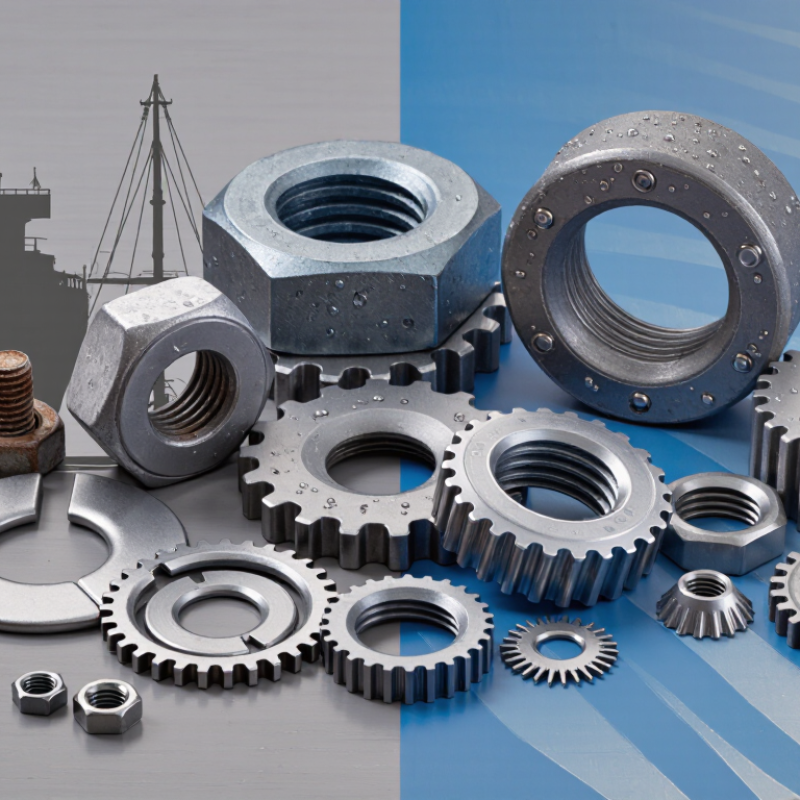
How to Choose Marine Grade Lock Washers?

What Marine Grade Lock Washers Are and Why They Matter

Marine grade lock washers help keep threaded joints secure in wet, vibrating environments. They sit beneath a nut or bolt head. Their uneven surfaces create resistance against loosening. Marine hardware faces salt spray, humidity, temperature changes, and constant movement. Ordinary steel can rust quickly in these conditions. Rust weakens the joint and may stain nearby surfaces. Small parts matter.

Material selection needs careful attention. Stainless steel 316 usually offers stronger saltwater resistance than 304 stainless steel. However, “marine grade” does not mean corrosion-proof. Surface damage, trapped water, and contact with dissimilar metals can still cause problems. Check the washer’s size, thickness, hardness, and compatibility with the fastener. A washer that fits poorly may flatten or shift during service.

I have seen loose washers caused by incorrect installation, not poor material. Clean the threads and mating surfaces before assembly. Tighten the fastener to the equipment manufacturer’s specification. Do not stack random washers to fill a gap. That shortcut can reduce clamping force. Lock washers also have limits in severe vibration, where a different locking method may work better. I once underestimated drainage around a deck fitting. The washer looked clean, but hidden moisture had started corrosion beneath it. Inspect exposed joints regularly, especially after rough weather.

How to Assess Marine Conditions and Corrosion Risks

How to Choose Marine Grade Lock Washers?

How to Assess Marine Conditions and Corrosion Risks

In marine projects, corrosion risk starts with the environment, not the washer. Record whether the joint faces salt spray, constant humidity, freshwater, or full seawater immersion. Harbor air can be aggressive, even when the assembly stays above the waterline. Temperature cycles also create condensation inside enclosed joints.

Look closely at crevices around the bolt, washer, and mating surface. Chlorides trapped in narrow gaps can cause pitting and crevice corrosion. Mixed metals create another concern. A stainless washer against a less resistant fastener may accelerate galvanic attack. That small contact area still matters. Marine grade is not a universal guarantee. For many exposed assemblies, corrosion-resistant stainless steel may be suitable, but the exact alloy should match the exposure and load. Coatings can help, yet damaged coatings often hide early corrosion.

Tips: Clean salt deposits regularly. Check for rust staining, washer distortion, and loose tension. Use compatible materials throughout the joint. Avoid sealing moisture into a dirty crevice. I have seen clean-looking hardware fail beneath a washer after repeated spray exposure. That mistake is easy to repeat. Reassess the choice after seasonal inspections, especially where waves, vibration, and trapped water combine.

How to Choose Marine Grade Lock Washers? - How to Assess Marine Conditions and Corrosion Risks

Marine Condition Typical Exposure Main Corrosion Risks Recommended Washer Material Selection Guidance Inspection Frequency
Indoor coastal or protected area Dry or occasionally humid air with limited salt deposition Surface rust, condensation-related corrosion, and dissimilar-metal contact Austenitic stainless steel such as 304 or 316, depending on chloride exposure Use 316 where salt spray or condensation is frequent. Keep the joint clean and dry when possible. Every 6–12 months
Freshwater or brackish-water equipment Repeated splash, spray, or intermittent immersion Pitting, crevice corrosion, and galvanic corrosion at fastener interfaces 316 or 316L stainless steel Use compatible nuts and bolts, avoid stagnant water pockets, and isolate dissimilar metals where practical. Every 3–6 months
Open coastal atmosphere Continuous salt-laden air, wind-driven spray, and high humidity Chloride pitting, crevice corrosion, and corrosion under deposits 316 or 316L stainless steel with a suitable marine-grade finish Prefer smooth, clean surfaces. Do not assume stainless steel is corrosion-proof in salt exposure. Every 3 months
Direct seawater splash zone Frequent saltwater wetting followed by drying Severe chloride pitting, crevice attack beneath washers, and galvanic coupling 316L for moderate duty; duplex stainless steel or higher-alloy material for severe duty Minimize crevices, prevent salt accumulation, and verify that the washer, bolt, nut, and base material are galvanically compatible. Monthly to quarterly
Continuous seawater immersion Permanent or long-duration immersion in chloride-rich water Pitting, crevice corrosion, microbiologically influenced corrosion, and galvanic corrosion Duplex stainless steel, super-austenitic stainless steel, or nickel-based alloy as required by the design Obtain material compatibility and corrosion-life verification. Standard 316 stainless steel may be unsuitable for critical permanent immersion. Based on a documented maintenance plan
High-temperature marine equipment Salt exposure combined with elevated operating temperature Accelerated oxidation, chloride attack, loss of preload, and thermal relaxation Material selected for both chloride resistance and the specified temperature range Check the washer's temperature rating, spring characteristics, hardness, and preload retention before installation. At each planned shutdown
Polluted or chemically exposed marine area Seawater combined with cleaning chemicals, industrial pollutants, or acidic deposits Localized corrosion, stress corrosion cracking, and chemical degradation of protective finishes Specialty stainless steel or nickel-based alloy selected through chemical compatibility review Review chloride concentration, pH, temperature, chemical contact time, and mechanical loading before choosing the washer. According to exposure severity
Low-load, non-critical joint Light structural, enclosure, or equipment fastening Washer deformation, loosening from vibration, and surface corrosion 316 stainless steel lock washer, provided the joint design permits it Confirm washer hardness, dimensions, and load capacity. A lock washer alone should not replace correct torque or joint design. Every 6–12 months
High-vibration or safety-critical joint Engines, pumps, rotating machinery, or load-bearing assemblies Loss of preload, fatigue, fretting, loosening, and corrosion-assisted cracking Corrosion-resistant material validated with the complete locking system Use an engineered locking method, verify tightening torque, and assess vibration and fatigue loads. Do not rely on a generic split washer without validation. During scheduled maintenance and after abnormal vibration
Key assessment factors: chloride concentration, wetting and drying cycles, temperature, oxygen availability, crevice geometry, water flow, chemical exposure, vibration, joint preload, and contact with dissimilar metals. Stainless steel grades can still pit or suffer crevice corrosion in marine environments, so material selection should be combined with suitable joint design, installation torque, drainage, cleaning, and inspection.

How to Select the Right Washer Material and Coating

Choosing marine grade lock washers begins with the environment, not the label. “Marine grade” is not a universal performance guarantee. Salt spray, standing water, temperature, and cleaning chemicals all affect material selection. For exposed seawater, 316 stainless steel usually offers better chloride resistance than 304 stainless steel. It is a safer choice for deck hardware, coastal machinery, and regularly wet assemblies. Still, 316 can stain or corrode in crevices.

Check the fastener material too. Dissimilar metals may create galvanic corrosion, especially around wet aluminum structures. A stainless washer against carbon steel can become part of the problem. In field inspections, I look for brown staining, white powder, and damage around the washer edge. These small signs often appear before serious loosening. Do not ignore them.

Coating selection depends on exposure and maintenance. Zinc coatings can protect carbon steel in damp areas, but saltwater quickly challenges damaged surfaces. A thicker marine-rated coating may help, yet scratches still need attention. Some plated finishes also complicate electrical contact or torque readings. For severe service, an uncoated corrosion-resistant alloy may be more dependable than a cheaper coated washer. I once treated coating thickness as the main answer. That was too narrow. Load, washer hardness, installation torque, and inspection access matter equally. Verify test data, coating compatibility, and temperature limits before approval.

How to Choose Marine Grade Lock Washers?

Selecting the right washer material and coating for chloride-rich marine environments.

How to read this chart: The approximate PREN values are calculated using the common formula PREN = %Cr + 3.3 × %Mo + 16 × %N. A higher value generally indicates better resistance to chloride-induced pitting. These values are comparative and do not replace project-specific testing, crevice-corrosion assessment, or galvanic compatibility checks. For stainless steel washers, passivation helps preserve the protective oxide layer. For carbon-steel washers, a thicker hot-dip galvanized coating generally provides more durable sacrificial protection than basic electroplating.

How to Match Washer Size, Type, and Fastener Compatibility

How to Choose Marine Grade Lock Washers?

Washer size must match both the fastener and the joint surface. Use the fastener’s nominal diameter as your starting point. Then check the washer’s inside diameter, outside diameter, and thickness. A loose fit can reduce clamping stability. A tight fit may damage threads during installation.

For marine assemblies, 316 stainless steel washers often provide strong resistance to saltwater exposure. However, material choice alone is not enough. Match the washer’s hardness and load capacity with the bolt grade. A soft washer under a high-strength bolt may deform.

Review dimensional requirements in ASME B18.21.1 and fastener property data in ISO 898-1. Lock washers also have limits. They may not prevent loosening under severe vibration as reliably as engineered prevailing-torque or tension-control methods. That detail is easy to overlook.

Tips:

Measure the bolt before ordering. Select a washer with a clean, even bearing surface. Avoid mixing dissimilar metals without checking galvanic-corrosion risk. The NACE IMPACT study estimated global corrosion costs at about 2.5 trillion US dollars annually, equal to roughly 3.4% of global GDP. Small hardware deserves serious inspection. In field work, I would also check salt deposits, edge wear, and washer flattening during scheduled maintenance. This is not perfect, but it catches failures early. Be cautious with assumptions. The “marine grade” label does not guarantee compatibility.

How to Inspect, Install, and Maintain Marine Grade Lock Washers

How to Choose Marine Grade Lock Washers?

Inspect marine grade lock washers before installation, especially after storage near saltwater. Confirm the material, size, and hardness against the fastener specification. Stainless steel washers should show consistent surfaces without red rust, deep pits, cracks, or flattened edges. Check the mating bolt and nut too. A perfect washer cannot rescue damaged threads.

The NACE IMPACT study estimated global corrosion costs at about 2.5 trillion dollars annually, equal to 3.4% of global gross domestic product. That figure explains why small inspection habits matter. Clean salt deposits with fresh water and a suitable non-abrasive cleaner. Dry every contact surface. Do not mix metals casually; galvanic corrosion can attack the less noble component. This mistake is common.

Install the washer squarely under the nut or bolt head, following the fastener manufacturer’s torque guidance. A lock washer is not a universal answer for severe vibration. Use an engineered locking method when the joint design requires it. Tightening by feel is unreliable. Use a calibrated torque wrench, and record the value for maintenance history. After installation, mark the nut and adjacent surface with a visible witness line.

Inspect exposed joints after heavy spray, unusual movement, or coating damage. A quarterly check is a practical baseline, but harsh service may demand shorter intervals. Look for loosened witness marks, rust staining, washer distortion, and salt buildup. Replace questionable washers rather than reusing them. I have seen clean-looking parts fail beneath hidden pitting. Visual inspection is useful, but never perfect.

FAQS

What does a marine-grade lock washer do?

It sits beneath a nut or bolt head. Its uneven surface adds resistance against loosening. This helps in wet, vibrating joints. Small parts still matter.

Why is stainless steel 316 often selected?

Stainless steel 316 usually resists saltwater better than 304 stainless steel. It suits deck hardware and regularly wet assemblies. However, it can still stain or corrode. The label is not a guarantee.

Can a marine-grade washer resist all corrosion?

No. Scratches, trapped water, and dissimilar metals can cause corrosion. Hidden moisture may collect beneath a clean-looking washer. I once underestimated drainage around a deck fitting. That assumption needed correction.

How should washer size be checked?

Match the washer to the fastener and joint surface. Check inside diameter, outside diameter, and thickness. A loose washer may shift. A tight washer may damage threads.

What happens when the washer and fastener use different metals?

Wet dissimilar metals can create galvanic corrosion. This is especially risky near aluminum structures. Look for brown stains, white powder, or edge damage. Small warning signs deserve attention.

How should a lock washer be installed?

Clean the threads and mating surfaces first. Tighten the fastener to the equipment specification. Do not stack random washers to fill gaps. That shortcut may reduce clamping force.

Are lock washers suitable for severe vibration?

They have limits. Severe vibration may require another engineered locking method. Check the joint’s movement, load, and service conditions. Do not assume one washer solves everything.

What should routine inspection include?

Check for salt deposits, rust stains, flattening, edge wear, and moisture. Inspect exposed joints after rough weather. Look beneath fittings when possible. Maintenance is imperfect, but early checks can prevent bigger failures.

Conclusion

Choosing the right Marine Grade Lock Washers is essential for maintaining secure, corrosion-resistant connections in demanding marine environments. This guide explains how these washers help prevent fastener loosening caused by vibration, movement, and changing loads. It also outlines how to evaluate exposure to saltwater, humidity, temperature changes, and chemicals before selecting suitable materials and protective coatings. Stainless steel and other corrosion-resistant options may be appropriate, but the best choice depends on the vessel’s operating conditions and maintenance requirements.

The article also covers how to match washer size, design, and locking function with the fastener’s diameter, thread type, strength, and base material. Proper inspection should include checking for rust, deformation, surface damage, and loss of spring tension. During installation, clean contact surfaces, apply the correct tightening method, and avoid reusing damaged washers. Regular inspections and timely replacement can help preserve joint stability, reduce maintenance problems, and support long-term reliability in marine applications.


Henry

Henry

Henry is a dedicated marketing professional with a profound expertise in the company's offerings. With years of experience in the industry, he possesses an impressive understanding of the market dynamics and consumer behaviors that drive success. Henry is committed to sharing his insights through......