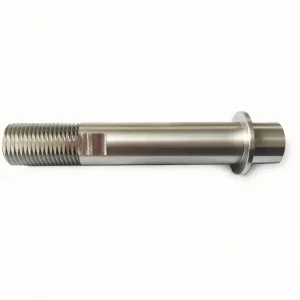
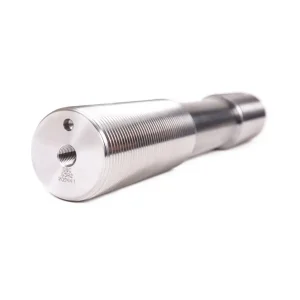
In the matrix of modern heavy industries, mechanical fasteners are no longer deemed trivial hardware commodities. They represent crucial structural engineering nodes. At Beiersdorf Industrial Technology (Shanghai) Co., Ltd., we understand that structural failures in high-load projects typically stem not from primary beam fractures, but from connection point failures under vibration fatigue, thermal stress, or galvanic corrosion. Global enterprise procurement agents require high-performance, certified fastening units that guarantee long-term operation under structural anomalies.
Procurement paradigms have shifted from transactional line-item pricing to long-term lifecycle metrics. Modern industrial procurement systems prioritize raw material trace documentation, metallurgical consistency, and rigorous anti-fatigue certification. A single unscheduled downtime event at a petrochemical refining plant or offshore oil platform can result in massive daily losses. Consequently, investing in specialty materials like Inconel 718, Super Duplex 2205, or Titanium Grade 5 bolts eliminates the hidden financial liabilities associated with corrosion-induced system shut-downs.
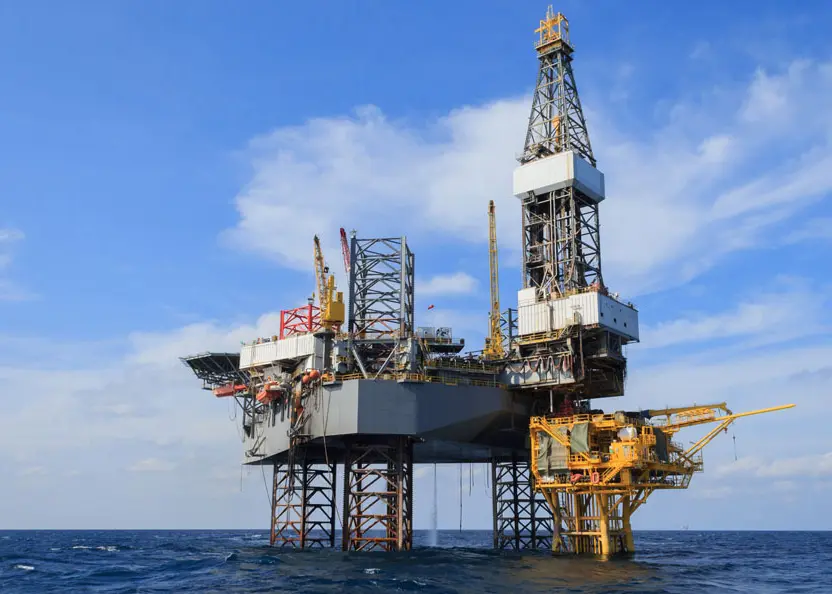
Offshore environments subject mechanical joints to aggressive saline corrosion and continuous cyclic shear stress. Our custom fasteners are extensively implemented in marine propulsion plants, structural yacht hulls, subsea drilling equipment, and deepwater marine pipelines.
Key material grades include A4-80, A5-80, D8-80, 2205 Duplex Stainless, and Nickel Alloys. All items are certified by corresponding classification societies to ensure deepwater integrity and resistance to chloride stress-corrosion cracking.
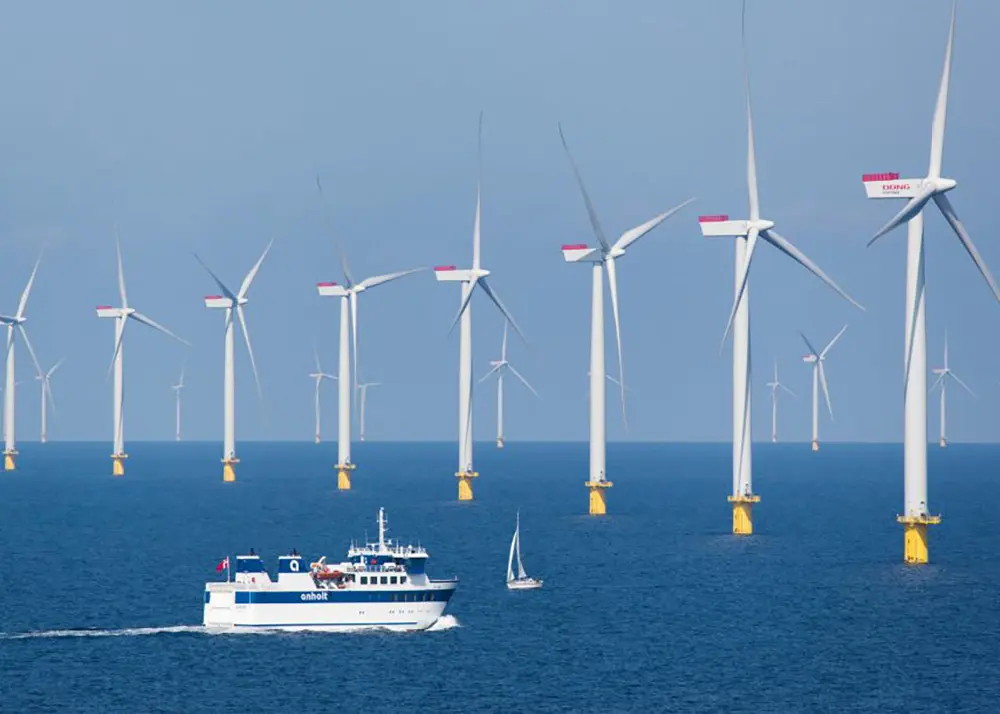
Power generation facilities, wind turbines, and petrochemical refinery reactors subject threaded components to thermal expansion loads and gas exposures. Ordinary carbon steels experience stress-rupture phenomena under such conditions.
Our solutions feature specialized high-temperature alloy fasteners designed to operate securely up to 1200°C, preserving high tensile strength without creep deformation or thread galling under load.
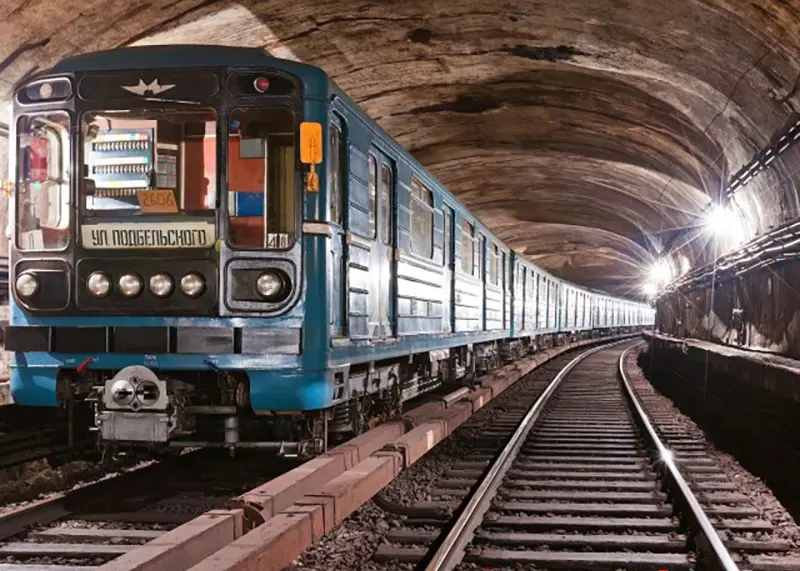
Rail operations demand fastening systems that withstand constant vibration and heavy mechanical loads. Our structures utilize high-tensile alloy connections that prevent loosening under extreme dynamics.
By leveraging custom thread designs and specialized locknut systems, we ensure structural integrity across tracks, switches, and rolling stock under extreme conditions.
Ultra-clean vacuum environments and aerospace assembly require lightweight, non-magnetic, and chemically inert hardware. Precision is measured at the micrometer level to avoid outgassing and electromagnetic interference.
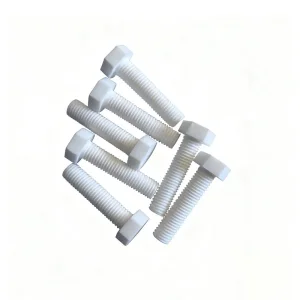
We supply non-magnetic stainless alloys, titanium fasteners, and high-performance engineering plastics (PEEK, PVDF) that maintain mechanical integrity in cleanrooms and orbit.

Selecting the optimal material system requires a balance of environmental chemistry, thermal dynamics, and mechanical load profiles. Below is a reference matrix highlighting the performance of our customized fasteners under distinct operations.
| Fastener Classification | Primary Alloys / Materials | Tensile Strength Limit | Thermal Threshold Range | Target Industrial Environment |
|---|---|---|---|---|
| Non-Magnetic Fasteners | High-Nitrogen Stainless, Titanium Gr.5 | 750 - 950 MPa | -196°C to 450°C | MRI Equipment, Aerospace Radar, Lithium Battery Assembly |
| High-Temperature Bolts | Inconel 718, Nimonic 80A, Incoloy | 900 - 1200 MPa | Up to 1200°C | Gas Turbines, Exhaust Manifolds, Chemical Reforming Units |
| Cryogenic Fasteners | SS316LN, 9% Nickel Steel, Cobalt Alloys | 800 - 1050 MPa | Down to -270°C | LNG Terminals, Liquid Hydrogen Fuel Cells, Aerospace Cryo Tanks |
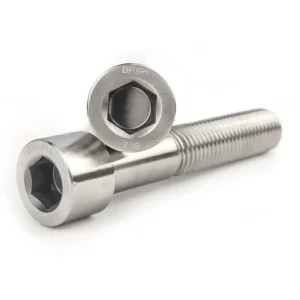
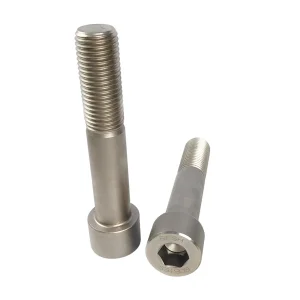
| Ultra-High Strength | 40CrNiMoA, Custom Alloy Steel (Heat-treated) | 1200 - 1900 MPa | -60°C to 350°C | Heavy Mining Machinery, Bridge Cable Anchorages, High-Load Engines |
| Corrosion-Resistant Plastic | PEEK, PVDF, PTFE, Nylon 66 | 80 - 150 MPa | -50°C to 250°C | Semiconductor Etching Equipment, Electroplating Tanks, Acidic Processing |
For ultra-high strength fasteners (tensile strength ≥ 10.9 grade or 1040 MPa), hydrogen embrittlement represents a significant risk of sudden failure. During electroplating or chemical cleaning processes, atomic hydrogen can diffuse into the steel crystal matrix. Under static tensile loads, these hydrogen atoms migrate to stress concentration areas, initiating micro-fractures.
To eliminate this phenomenon, our production protocol uses strict acid-free mechanical cleaning, low-hydrogen thermal baking within a set window post-plating, and advanced vacuum induction melting. This ensures that the residual hydrogen concentration remains well below critical levels.
Our engineering group holds over 100 utility model patents and eight invention patents. We develop proprietary metallurgical alloys and thread geometries to minimize stress concentration, optimize torque coefficients, and improve shear resistance.
Quality is the foundation of our enterprise. We utilize a strict sampling inspection framework along with 100% electromagnetic eddy-current testing, ultrasonic fault identification, and spectral raw-material checks to target zero-defect shipments.
We manage a large inventory of nearly 100,000 product configurations, maintaining 500 tons of specialty raw material stock and 10,000 tons of finished stainless steel standard parts. This ensures rapid turnaround times for global orders.
Operating from our 2,535 m² production base in Shanghai, Beiersdorf Industrial Technology integrates design, testing, manufacturing, and supply chain management. We partner with industrial enterprises, EPC contractors, and design bureaus to provide reliable, standard-compliant components for demanding operating environments.
Operating internationally requires strict alignment with global standards organizations. We ensure our manufacturing processes conform to standard systems including DIN, ISO, ASTM, ASME, EN, JIS, and GB. This compatibility allows our components to serve as drop-in replacements in existing industrial systems without requiring rework.
For maritime and deepwater applications, certifications from bodies such as the China Classification Society (CCS), DNV, ABS, and Lloyd's Register (LR) are crucial. Our certified product line undergoes testing for Charpy V-notch impact strength, intergranular corrosion susceptibility, and fatigue life under simulated wave-action loading. These verifications ensure our fasteners remain secure under offshore operational loads.
We provide full EN 10204 3.1 material certificates with our shipments. These documents trace the production history of the raw material from the initial furnace heat through chemical analysis, mechanical property verification, and dimensional inspection, ensuring complete traceability for high-spec engineering projects.
Whether you require early-stage metallurgical consultations, product configuration selection, or compliance validation documentation, our engineering team is available to support your project requirements.
+86 (0) 21-38022886Get in touch with our experts for pricing and structural engineering support.
 BSF
BSF