Thermal stability under extreme structural stress is the defining challenge of modern high-temperature industrial engineering. Our specialized fasteners are designed and fabricated to resist creeping, mechanical failure, oxidation, and severe thermal relaxation in service temperatures ranging from 400°C up to 1200°C.
From advanced mining extraction installations to thermal processing boilers, high-performance fastening is the silent protector of operational yield. In partnership with leading engineering networks across Lesotho and sub-Saharan Africa, Beiersdorf Industrial Technology supplies highly certified titanium, cobalt, and nickel-based superalloy fasteners engineered to endure where standard stainless components yield.
"Product quality is the foundation for an enterprise's survival." Operating a dedicated 2,535 m² production facility in Shanghai, China, Beiersdorf is globally recognized for ultra-high precision, holding 100+ utility patents and 8 invention patents.
Engineered to ensure zero thermal failure across power plants, chemical reactors, and mining deep-shaft infrastructure.
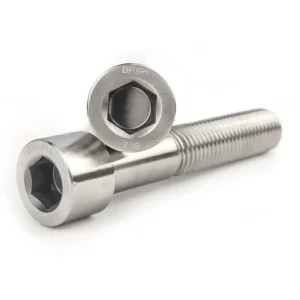
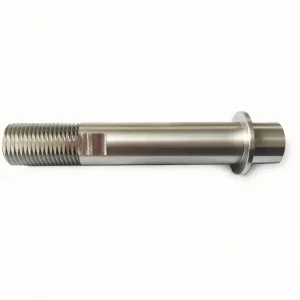
Lesotho's unique economic geology and high-altitude geography dictate specific requirements for mechanical hardware. Industrial environments in Maseru, Mafeteng, and the highland mining centers demand specialized materials due to elevation-induced atmospheric factors, high pressure, and localized temperature shifts.
Key industrial sectors operating under thermal load within the country include:
Using alloy standard fasteners like standard carbon steels leads to accelerated creep and failure in these settings. Our custom nickel and cobalt alloy solutions help stabilize thermal connections, ensuring long-term structural integrity.
Mine Processing Plants: Heavy industrial screens and thermal rotary kilns where constant vibration is paired with process temperatures reaching up to 600°C.
High-Altitude Solar Thermal Initiatives: Solar collectors and steam turbine mounts that experience daily thermal expansion cycles due to Lesotho's intense mountain solar radiation and cold nights.
Industrial Steam Pipelines: Steam distribution manifolds in textile processing centers requiring persistent clamping force at high temperatures.
Rapid Material Evolution: Demand is shifting from standard grade 304/316 stainless steels to Inconel 718, Nimonic, and titanium alloy compounds to meet the requirements of modern aerospace and power generation applications.
High Efficiency Turbines: Modern gas and steam turbines operate at elevated temperatures to achieve higher thermal efficiency, necessitating advanced structural fasteners.
Predictive Failure Analysis: The integration of finite element analysis (FEA) assists in evaluating creep and thermal fatigue profiles prior to actual field deployment.
Globally, the high-temperature fastener market is expanding due to the modernization of chemical processing, aerospace technology, and power generation. Industries are demanding materials that can perform under high temperatures and pressures.
Key drivers of this trend include energy production developments (such as combined-cycle gas turbines and nuclear power infrastructure) and aerospace engineering. Because turbine components must operate reliably near their physical limits, the requirements for specialty fasteners have increased significantly.
Additionally, petrochemical processing facilities are processing heavier crudes at higher thermal levels, requiring high-strength, corrosion-resistant alloy bolts. As a supplier to these global markets, Beiersdorf maintains a robust raw material inventory to ensure fast order fulfillment and compliance with international standards.
Scientific selection of alloys based on thermal exposure, mechanical load, and operating environment.
Custom structural components engineered to maintain tensile properties under heavy shear stresses, minimizing the risk of sudden mechanical failure.
Optimized for structural integrity across high-temperature applications, including exhaust manifolds, gas turbine housings, and thermal cracking units.
Alloy compositions selected to minimize plastic deformation under constant load, preserving joint clamping pressure over long operation cycles.
When engineering fasteners for high-temperature environments, selecting the appropriate base metal is critical. Standard carbon steels lose mechanical strength rapidly above 350°C. Even standard austenitic stainless steels, like 304 and 316, can experience stress relaxation, creep, and oxidation when exposed to prolonged temperatures above 500°C.
To address these challenges, we utilize high-performance alloys designed for specific temperature ranges:
Our quality management system is designed to identify and eliminate defects prior to shipment. Because high-temperature fasteners operate in critical infrastructure, we subject our production runs to rigorous testing protocols.
Our verification processes include:
We implement a strict sampling inspection system to minimize defects in products leaving our factory.
Our group maintains over 100 utility model patents and eight invention patents, focusing on advanced manufacturing and material science.
We manage nearly 100,000 product configurations, stocking 500 tons of raw materials and 10,000 tons of finished stainless steel standard components.
Specific high-temperature fastening scenarios encountered in the Lesotho industrial landscape.
Processing machines at high elevations experience temperature variations from cold ambient conditions to friction-heated operation. We supply heavy-duty bolts designed to handle these thermal cycles and minimize shear failure in crushing machinery.
Industrial boilers in processing plants use high-pressure steam. Our corrosion-resistant, high-temperature fasteners maintain clamping force, helping prevent joint leaks and steam line downtime.
Hydroelectric power plants and regional solar thermal installations require durable structural fasteners. Our materials are designed to resist thermal expansion and corrosion in outdoor environments over long service lives.
Addressing common queries from mechanical engineers and procurement officers regarding high-temperature fasteners.
Our complete line of high-strength, low-temperature, marine-grade, and custom-machined structural fasteners.
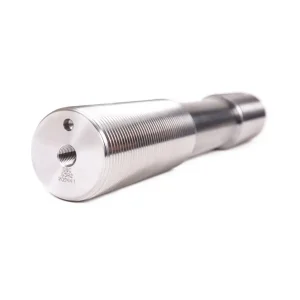
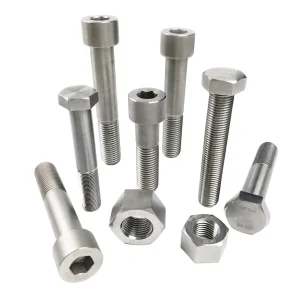
Beiersdorf provides technical consultation and guidance for fasteners, including material selection during the design phase, as well as installation and maintenance guidance for industrial projects.
Our technical sales team handles custom inquiries and works with project specifications to provide detailed quotes for operations in Lesotho and worldwide.
Provide your project requirements below to receive a proposal.
 BSF
BSF