 BSF
BSF
1 / 5
Mainly contains chromium (16–26%) and nickel (6–22%). Common grades include 304 and 316.
Strong corrosion resistance, non-magnetic, good toughness, easy to process, and excellent welding performance.
Austenitic stainless steel (such as 1.4310CSPFH, SUS301) is widely used in the manufacturing of food processing equipment, kitchenware (such as knives, pots) and tableware, meeting food-grade cleaning requirements and being less likely to contaminate food.
Chemical and Energy Equipment
Chemical industry: Used in reaction vessels, pipelines, storage tanks, etc., resistant to corrosive media such as acids, alkalis, and salts.
Petroleum and natural gas: Manufacturing corrosion-resistant components such as valves and pump shafts; for example, S20910 stainless steel is suitable for high-temperature and high-pressure environments.
Architecture and Decoration
Building structure: Used for exterior walls, railings, roofs, etc., combining both beauty and durability.
Transportation
Automobile manufacturing: SUS301 is used for body structure components, exhaust pipes, etc., achieving both lightweight and high strength.
Aerospace: Materials such as S20910 are used for engine parts and fasteners, meeting the requirements of high strength and high temperature resistance.
Contains chromium (12–18%) and carbon (0.1–1.2%). Common grades include 410 and 420.
Strength and hardness can be enhanced through heat treatment, good wear resistance, but relatively weak corrosion resistance, and magnetic.
Medical Devices and Surgical Instruments
Surgical instruments such as scissors, forceps, surgical knives, etc., must meet the requirements of high hardness and corrosion resistance.
Industrial Cutting Tools and Mechanical Components
Food processing tools: For instance, Z30Cr13 martensitic stainless steel tools have superior corrosion resistance to Cl⁻ compared to 420J2.
Aerospace and Defense
Aircraft components: Used for missile casings, engine parts, etc., to meet requirements for high strength and corrosion resistance.
Contains chromium (10.5–30%), low carbon content. Common grades include 430 and 446.
Excellent corrosion resistance, especially against stress corrosion, magnetic property, medium strength, average welding performance.
Automobile Industry
Exhaust system: such as exhaust pipes, mufflers, etc., utilizing their high-temperature oxidation resistance (working temperature up to 800℃) and low thermal expansion coefficient.
Appliances and Kitchenware
Appliance exteriors: refrigerator door handles, microwave oven shells, etc., meeting the requirements of durability and cleanliness.
Commercial Installation
Chemical containers: Used for corrosion-resistant linings or pipelines. For instance, the S32803 grade performs exceptionally well in chemical reactors.
Contains chromium (18–28%), nickel (4.5–8%), and molybdenum (2.5–4%). Common grades include 2205 and 2507.
Combines the advantages of austenite and ferrite, with high strength, excellent corrosion resistance, and strong resistance to stress corrosion and pitting corrosion.
Petroleum and Natural Gas Industry
Sub sea pipelines and equipment: Duplex stainless steel (such as S31803) is used to manufacture sub sea pipelines, valves and pump bodies.
High-pressure and high-temperature environment: Suitable for equipment used in oil and gas extraction, storage and transportation, such as the cooler for the effluent from hydrogenation reactors.
Chemical and Environmental Protection Equipment
Reactor and heat exchanger: In chemical production, used to contact acidic media (such as acetic acid, formic acid), with outstanding resistance to local corrosion.
Flue gas desulfurization system: Resistant to corrosive environments containing sulfur and chloride ions.
Ocean Engineering
Vessel and Propeller: Resistant to seawater corrosion, suitable for marine platform components and high-pressure pipelines for seawater desalination.
Architecture and Energy
Nuclear power plant cooling system: Used in key facilities such as Blue Lock Nuclear Power Plant, resistant to high-temperature oxidation and stress corrosion.
|
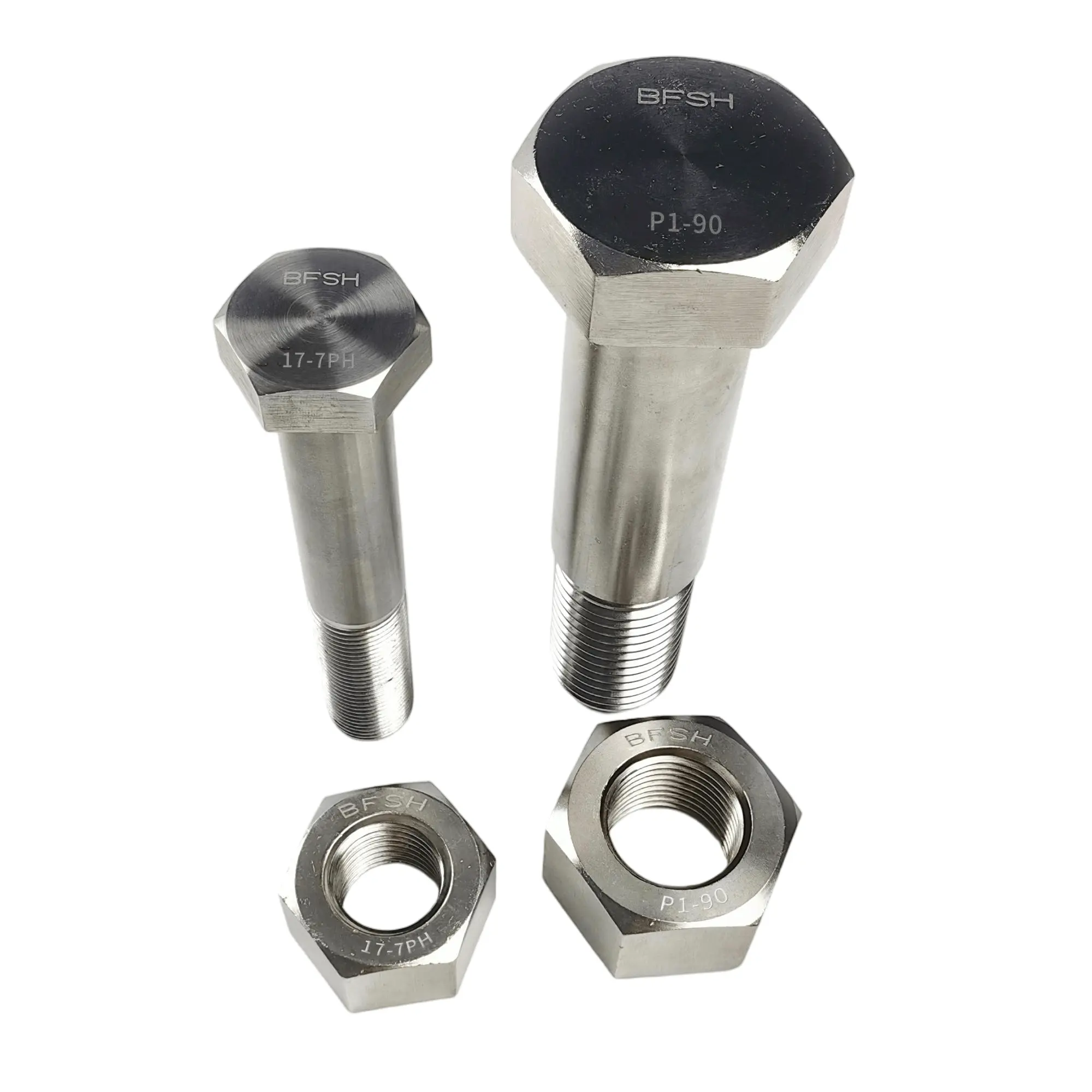
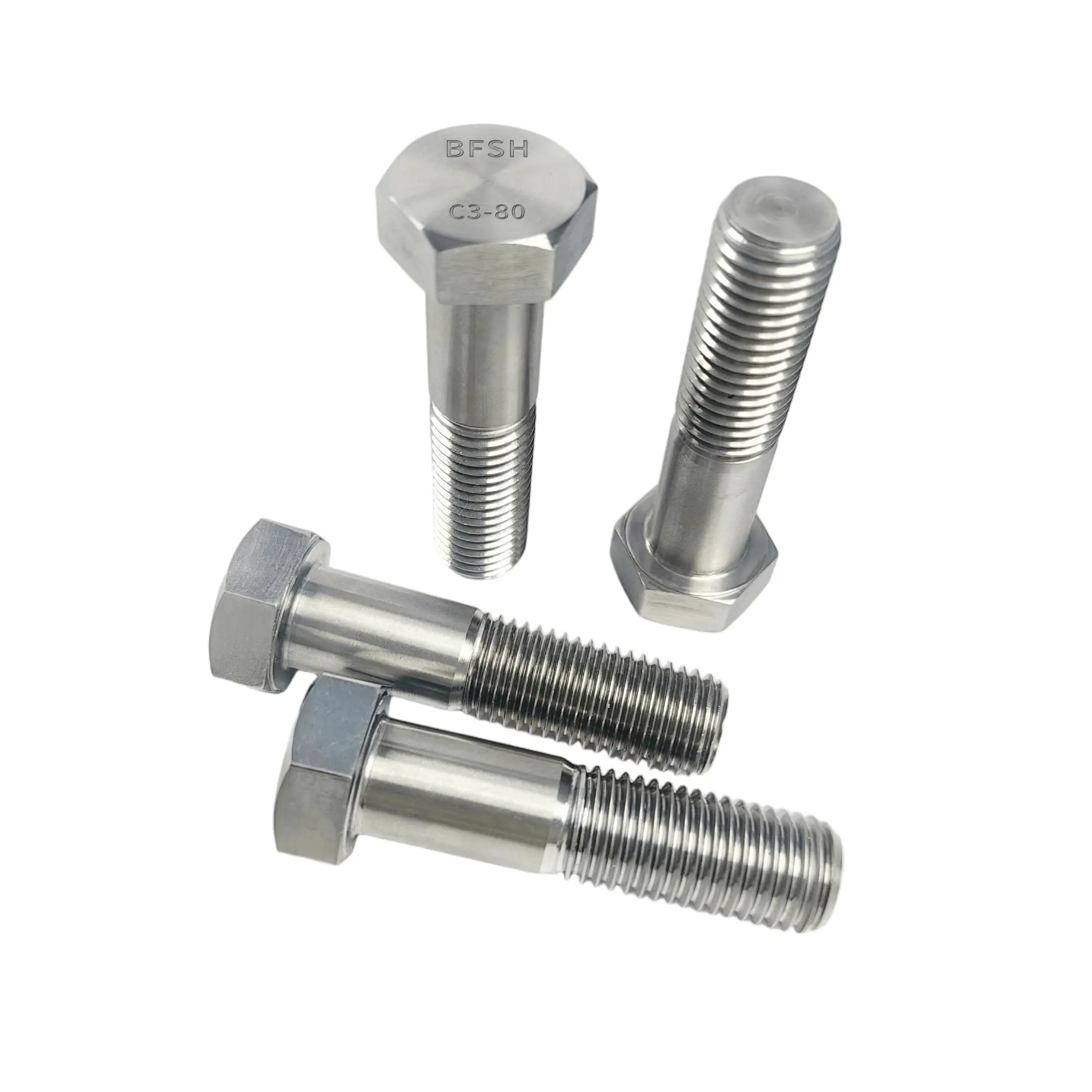
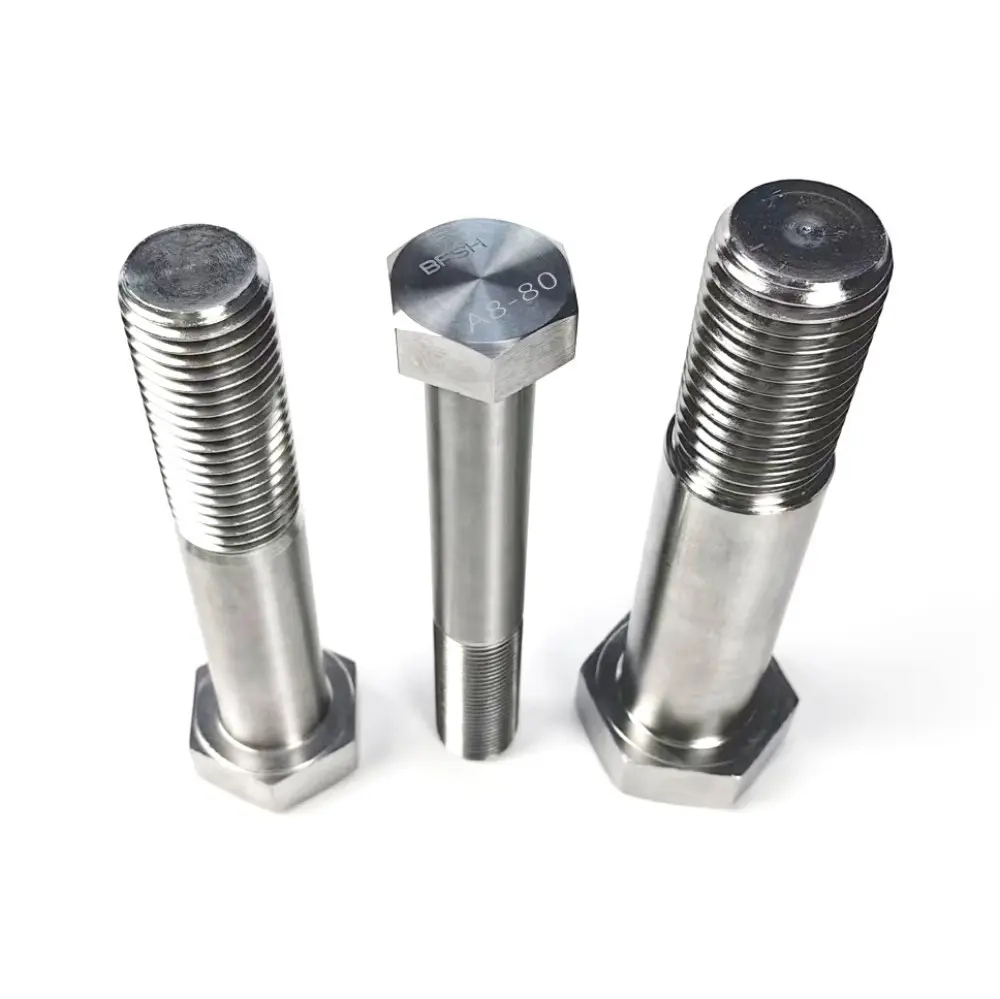
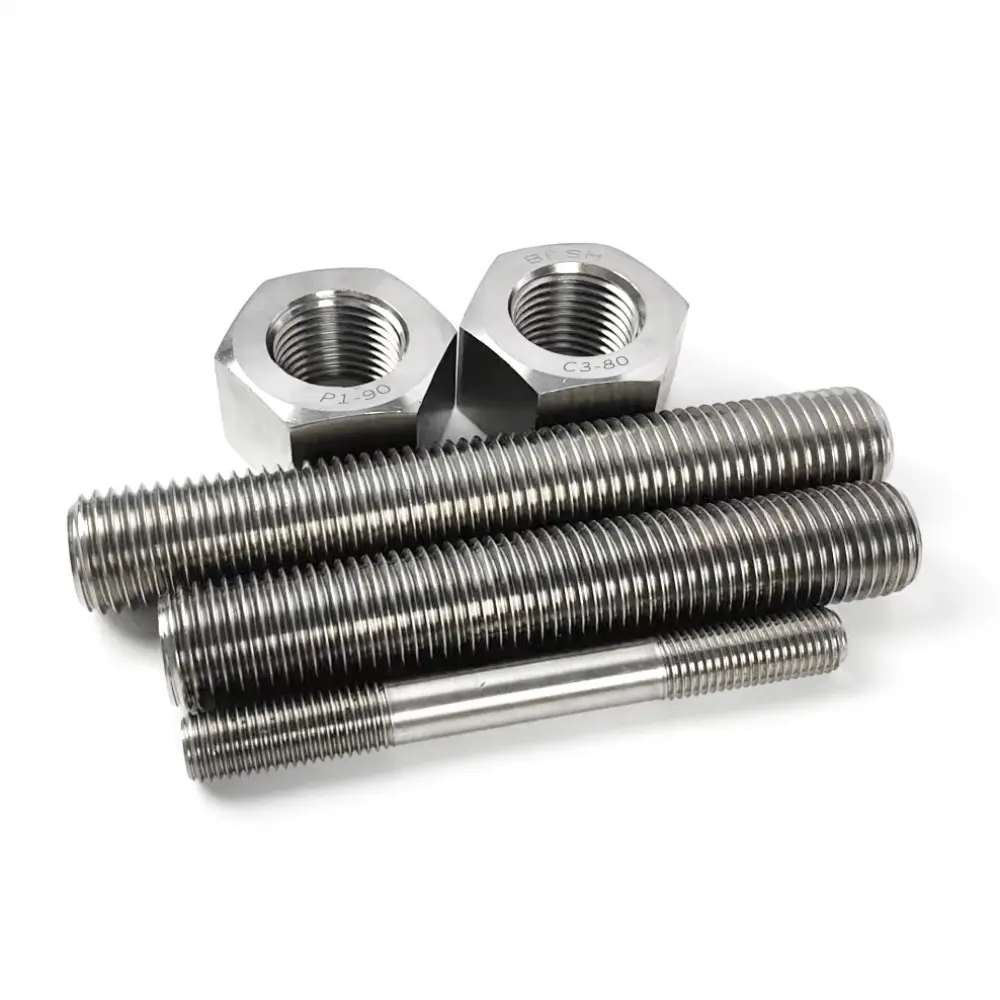
Performance Introduction and Supply Range of Stainless Steel High Strength Fasteners |
||||||||||||
Types |
Grade |
Tensile Strength Min |
Yield Strength Min |
Elongation after Break Min |
Percentage of Elongation Min |
Percentage of Contraction Min |
Hardness Range |
Executive Standard |
Scopes of Supply |
|||
HV |
HRC |
HBW |
||||||||||
Austenitic Stainless Steel |
A1 |
50 |
500 |
210 |
0.6d |
|
|
— |
— |
— |
ISO3506/1-2020 |
M1 — M140 |
70 |
700 |
450 |
0.4d |
|
|
— |
— |
— |
ISO3506/1-2020 |
M3 — M64 |
||
80 |
800 |
600 |
0.3d |
|
|
— |
— |
— |
ISO3506/1-2020 |
M3 — M48 |
||
A4 |
50 |
500 |
210 |
0.6d |
|
|
— |
— |
— |
ISO3506/1-2020 |
M1 — M140 |
|
70 |
700 |
450 |
0.4d |
|
|
— |
— |
— |
ISO3506/1-2020 |
M3 — M64 |
||
80 |
800 |
600 |
0.3d |
|
|
— |
— |
— |
ISO3506/1-2020 |
M3 — M48 |
||
100 |
1000 |
800 |
0.2d |
|
|
— |
— |
— |
ISO3506/1-2020 |
M6 — M16 |
||
A8 |
70 |
700 |
450 |
0.4d |
|
|
— |
— |
— |
ISO3506/1-2020 |
M3 — M64 |
|
80 |
800 |
600 |
0.3d |
|
|
— |
— |
— |
ISO3506/1-2020 |
M3 — M36 |
||
100 |
1000 |
800 |
0.2d |
|
|
— |
— |
— |
ISO3506/1-2020 |
M6 — M16 |
||
Duplex Stainless Steel |
D2 |
70 |
700 |
450 |
0.4d |
|
|
— |
— |
— |
ISO3506/1-2020 |
M3 — M64 |
80 |
800 |
600 |
0.3d |
|
|
— |
— |
— |
ISO3506/1-2020 |
M3 — M48 |
||
100 |
1000 |
800 |
0.2d |
|
|
— |
— |
— |
ISO3506/1-2020 |
M6 — M16 |
||
Martensitic Stainless Steel |
C1 |
50 |
500 |
250 |
0.2d |
|
|
155 — 220 |
— |
147 — 209 |
ISO3506/1-2020 |
M5 — M140 |
70 |
700 |
410 |
0.2d |
|
|
220 — 330 |
20 — 34 |
209 — 314 |
ISO3506/1-2020 |
M5 — M140 |
||
110 |
1100 |
820 |
0.2d |
|
|
350 — 440 |
36 — 45 |
— |
ISO3506/1-2020 |
M5 — M64 |
||
C3 |
80 |
800 |
640 |
0.2d |
|
|
240 — 340 |
21 — 35 |
228 — 323 |
ISO3506/1-2020 |
M5 — M140 |
|
120 |
1200 |
950 |
0.2d |
|
|
380 — 480 |
39 — 48 |
— |
ASTM F738M-02 |
M6 — M64 |
||
C4 |
50 |
500 |
250 |
0.2d |
|
|
155 — 220 |
— |
147 — 209 |
ISO3506/1-2020 |
M1 — M140 |
|
70 |
700 |
410 |
0.2d |
|
|
220 — 330 |
20 — 34 |
209 — 314 |
ISO3506/1-2020 |
M3 — M64 |
||
110 |
1100 |
820 |
0.2d |
|
|
350 — 440 |
36 — 45 |
— |
ASTM F738M-02 |
M6 — M64 |
||
Precipitation-Hardening Stainless Steel |
P1 |
90 |
900 |
700 |
0.2d |
|
|
285 — 370 |
28 — 38 |
— |
ASTM F738M-02 |
M6 — M64 |
XM-12 |
H900 |
1310 |
1170 |
|
10% |
35% |
|
40 Min |
|
ASTM A564-2019 |
M5 — M140 |
|
XM-13 |
H950 |
1515 |
1415 |
|
10% |
45% |
|
45 Min |
|
ASTM A564-2019 |
M5 — M140 |
|
XM-16 |
H900 |
1620 |
1515 |
|
8% |
30% |
|
47 Min |
|
ASTM A564-2019 |
M5 — M140 |
|
XM-25 |
H900 |
1240 |
1170 |
|
10% |
40% |
|
39 Min |
|
ASTM A564-2019 |
M5 — M140 |
|
S11100 |
H900 |
1700 |
1590 |
|
11% |
43% |
|
47 Min |
|
ASTM A564-2019 |
M5 — M140 |
|
S17400 |
H900 |
1310 |
1170 |
|
10% |
40% |
|
40 Min |
|
ASTM A564-2019 |
M5 — M140 |
|
S45503 |
H900 |
1620 |
1520 |
|
8% |
30% |
|
47 Min |
|
ASTM A564-2019 |
M5 — M140 |
|
S46500 |
H950 |
1655 |
1515 |
|
10% |
45% |
|
47 Min |
|
ASTM A564-2019 |
M5 — M140 |
|