Application Areas
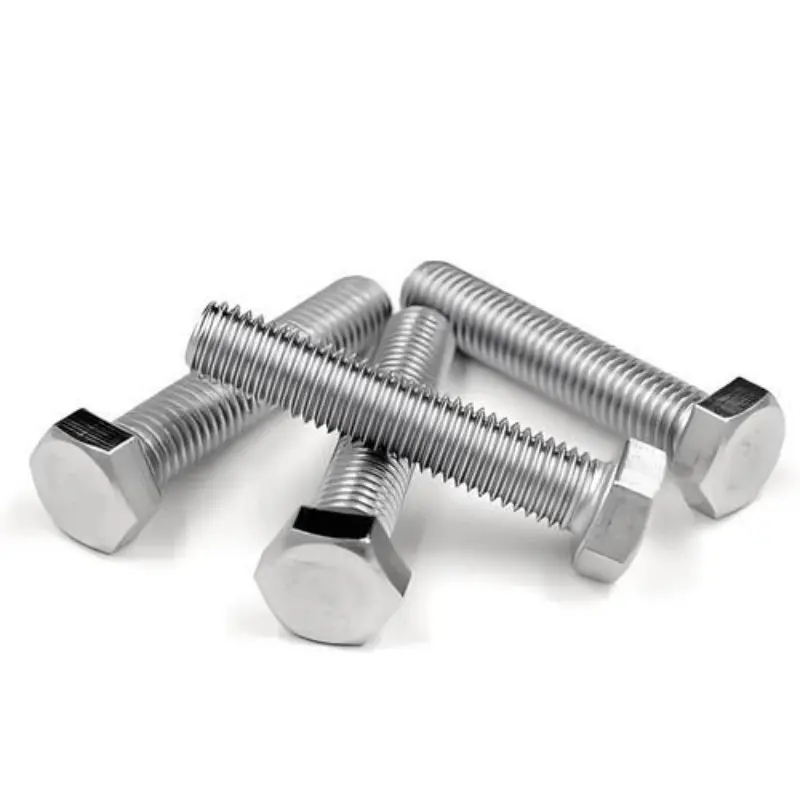
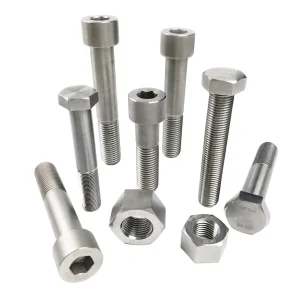
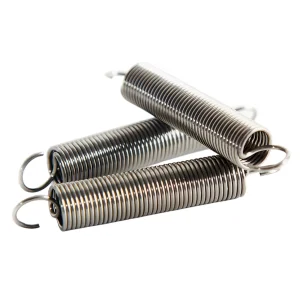
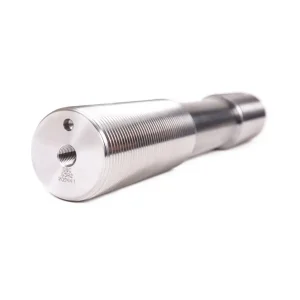
Non-magnetic fasteners play an irreplaceable role in precision instruments, medical equipment, and aerospace fields due to their unique anti-magnetic interference properties.
Ensures fixation of magnetic resonance systems without interfering with magnetic field uniformity or imaging accuracy.
Essential for satellite and aircraft components to avoid interfering with sensitive gyroscopes and magnetometers.
Used in high-frequency signal transmission components to significantly reduce signal distortion.
Prevents signal drift in high-precision electronic measuring equipment like spectrometers.
Crucial for superconducting quantum bits which are extremely sensitive to any external magnetic fields.
Amorphous alloy bolts reduce eddy current losses in transformer cores, enhancing energy efficiency.
Frequently Asked Questions
QWhat makes titanium alloy fasteners truly non-magnetic?
Titanium is a paramagnetic metal with extremely low magnetic permeability. It does not become magnetized even in strong fields, making it ideal for MRI machines and aerospace instruments.
QWhy do some stainless steel fasteners show slight magnetism after processing?
During cold heading, mechanical stress can cause a partial transformation of austenite to martensite. This is a processing-induced phenomenon and does not indicate a material defect.
QHow does A286 differ from standard austenitic stainless steel?
A286 is an iron-nickel-chromium superalloy that maintains a fully austenitic structure and superior non-magnetic properties even after significant cold working or mechanical stress.
QHow can I verify if a fastener is genuinely non-magnetic?
Verification should include a Material Test Certificate (MTC), chemical composition analysis, and a magnetic permeability test using a calibrated meter.
QWhich material is best for MRI medical applications?
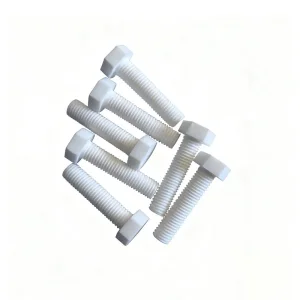
Titanium alloy and PEEK fasteners are preferred. Titanium offers mechanical strength and biocompatibility, while PEEK provides a non-metallic, electrically insulating solution.
QAre non-magnetic fasteners suitable for high temperatures?
Yes. Titanium alloys maintain performance up to 500℃. Grades like A286 (Gr.660) are specifically designed for high-temperature service while retaining their non-magnetic structure.
 BSF
BSF