 BSF
BSF
The Engineering Dynamics of Truss Head Self-Tapping Screws in Industrial Assemblies
Within high-vibration mechanical installations, structural metal framing, and maritime engineering, the choice of fastening geometries determines system integrity. A Truss Head Self-Tapping Screw (also known as a mushroom head self-tapping screw) represents an optimized solution balancing distribution of clamp load with low-profile clearance. Characterized by its extra-wide, slightly domed profile and flat bearing surface, the design provides distinct structural advantages over traditional pan or flat head configurations.
Mechanics of Thread Formations and Drive Profiles
Self-tapping screws function by cutting or forming matching mating threads directly into pre-drilled pilot holes. To guarantee reliable installation, the thread geometry must be engineered in accordance with the host material hardness:
- Thread Cutting (Type F, 23, 25): Features swage cutting edges or chips-cavities designed to carve threads out of thick, brittle materials such as cast iron, structural aluminum, or heavy zinc-alloy die castings.
- Thread Forming (Type AB, B, A): Displaces material around the pilot hole without generating waste swarf, ideal for ductile sheet metals and plastic enclosures. This creates a tight, zero-clearance fit resistant to vibration loosening.
- Drive Geometries: Designed to fit Phillips, Pozi, Torx, or Hexagonal sockets. Torx (hexalobular) and deep Phillips drives are preferred for automated high-torque assembly lines to prevent tool slippage (cam-out) and minimize bit wear.
Material Metallurgy: Meeting Extreme Service Conditions
For heavy industrial and aerospace applications, generic carbon steels are highly prone to catastrophic failure. At Beiersdorf Industrial Technology, our material solutions range from common grades to specialized aerospace and cryogenic-grade alloys:
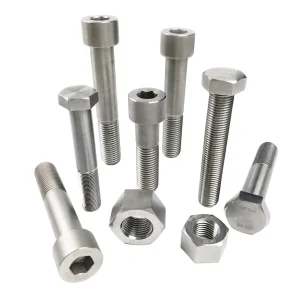
- Austenitic Stainless Steel (A2-70, A4-80): Combining superior rust resistance with high ductility. Grade A4-80, stabilized with molybdenum, is the standard for chemical processing and seaside environments.
- Titanium and Titanium Alloys (Grade 2, Grade 5 Ti-6Al-4V): Delivers extreme strength-to-weight ratios and bio-compatibility. Highly demanded in aerospace structures and medical-grade diagnostics.
- Inconel & Nickel-Based Alloys (Inconel 625, 718): Able to retain tensile strength and withstand oxidation at thermal cycles exceeding 1200°C.
- Cobalt and Super Alloys: Engineered for wear-resistance, high mechanical stress, and aggressive chemical exposures in sub-sea oil production.
Global B2B Sourcing: Mitigating Risk via Chinese Production Integration
Modern global logistics networks demand resilient supply chains. Historically, procurement directors faced a trade-off between the high costs of European specialty manufacturing and the uncertain quality of mass-market sourcing. Today, Chinese Factory 4.0 integration offers a path forward, combining technical expertise with high-volume cost efficiency.
With massive infrastructure investments in metallurgy, precision CNC centers, and certified testing apparatus, advanced Chinese manufacturers now operate under strict E-E-A-T credentials. By utilizing automated multi-station cold heading machinery and optical sorting lines, we produce structural fasteners that conform directly to DIN, ISO, ASME, and JIS standards, minimizing production deviations to parts-per-million (PPM) thresholds.